Tree Cutting isn’t guesswork. It isn’t brute force. And it sure as hell isn’t something you learn from a five-minute video online.
I’ve spent 15 years cutting trees professionally, climbing them, rigging them down piece by piece, and making hard calls when gravity, tension, and property are all working against you. After 15 years in the field, I can tell you this straight: tree cutting is a technical craft built on physics, planning, and safety, not just muscle.
If you’re here because you want real information—not sales fluff—you’re in the right place.
Table of Contents
What Tree Cutting Really Is (And What It Isn’t)
Tree cutting is the controlled removal of a tree or its parts using calculated techniques to manage:
- Weight
- Balance
- Fiber strength
- Gravity
- Tension and compression
Anyone can start a chainsaw. Very few understand how a tree will react once the cut is made.
After 15 years of hands-on tree cutting, I still treat every tree as a new problem. Species, lean, decay, wind exposure—every factor matters.
Tree cutting is applied physics at height.
My 15 Years in Tree Cutting: Hard Lessons Earned the Real Way
I didn’t learn tree cutting in a classroom. I learned it:
- Hanging on a rope 60 feet up
- Feeling wood fibers load up under tension
- Watching poorly planned cuts explode sideways
- Cleaning up mistakes I’ll never repeat
In 15 years of professional tree cutting, I’ve worked:
- Residential removals over homes
- Tight backyard dismantles with zero drop zones
- Storm-damaged trees under extreme stress
- Large hardwoods requiring complex rigging
That experience matters—because trees don’t forgive mistakes.
Tree Cutting Is About Control, Not Speed
Fast tree cutting is dangerous tree cutting.
Professional tree cutting focuses on:
- Predictable movement
- Controlled energy release
- Zero surprises
Every cut has a purpose. Every step is planned before the saw ever starts.
Directional Felling: Making the Tree Go Where YOU Decide
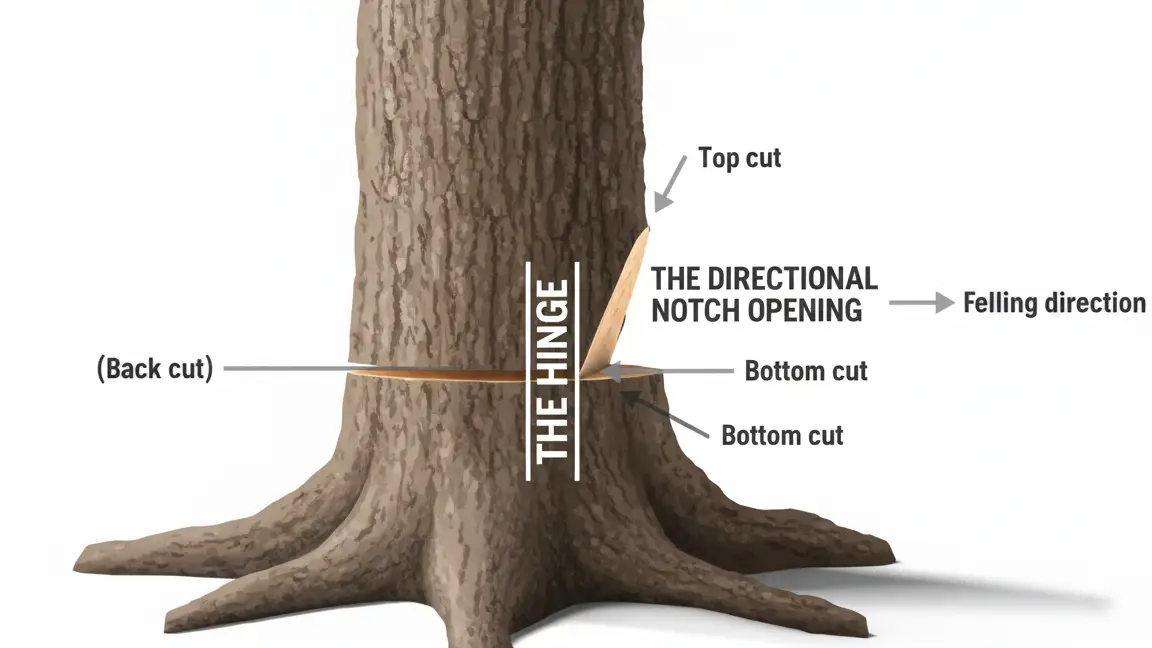
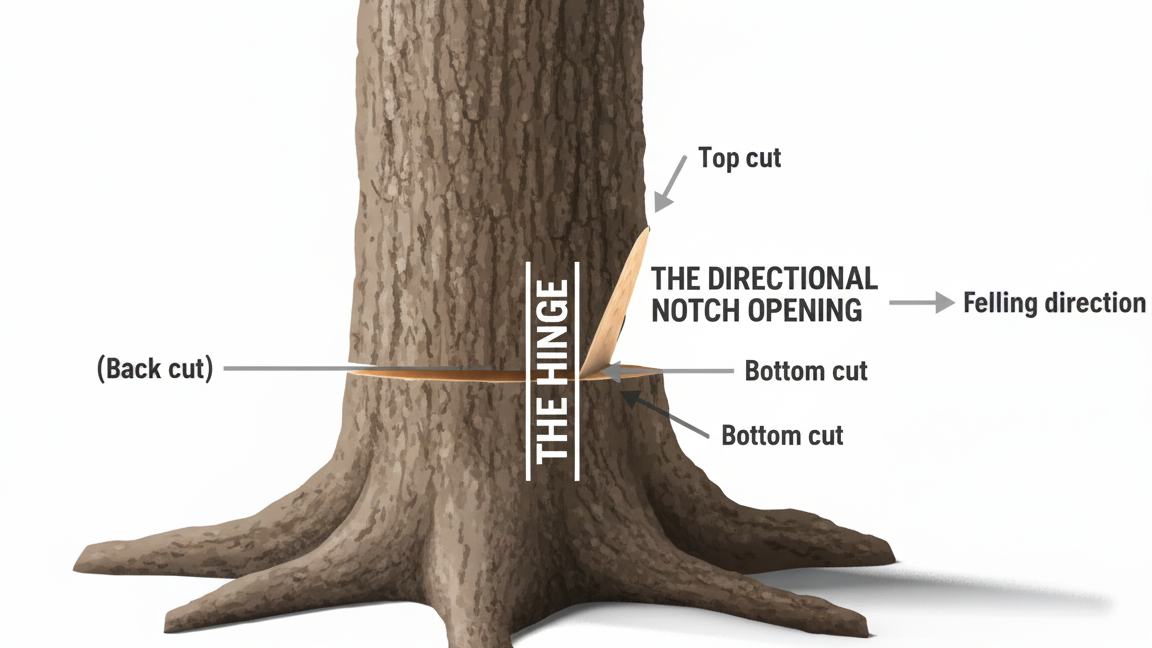
Directional felling is one of the most misunderstood parts of tree cutting.
This isn’t “cut and hope.”
Key elements of proper directional felling:
- Face cut geometry (open-face vs conventional)
- Hinge thickness and width
- Lean and side-weight compensation
- Wind influence
- Escape route planning
In my 15 years of tree cutting, I’ve seen more accidents from bad hinge work than bad chainsaws.
Directional felling is precision work. You’re guiding thousands of pounds of mass using inches of wood fiber.
Rigging: The Backbone of Technical Tree Cutting
When felling isn’t an option, rigging becomes everything.

Rigging is how professional tree cutting happens safely around:
- Homes
- Power lines
- Fences
- Vehicles
- Landscapes
Professional rigging involves:
- Load calculations
- Rope angles
- Friction management
- Dynamic vs static forces
In 15 years of rigging trees, I’ve learned one rule:
If you don’t respect force multiplication, it will humble you fast.
Tree cutting rigging failures don’t break ropes—they break anchors, blocks, and people.
Sectional Dismantling: Tree Cutting One Piece at a Time
Sectional dismantling is advanced tree cutting.
This is where experience separates professionals from amateurs.
Sectional dismantling includes:
- Top-down removal
- Negative rigging
- Controlled free-fall zones
- Precision lowering
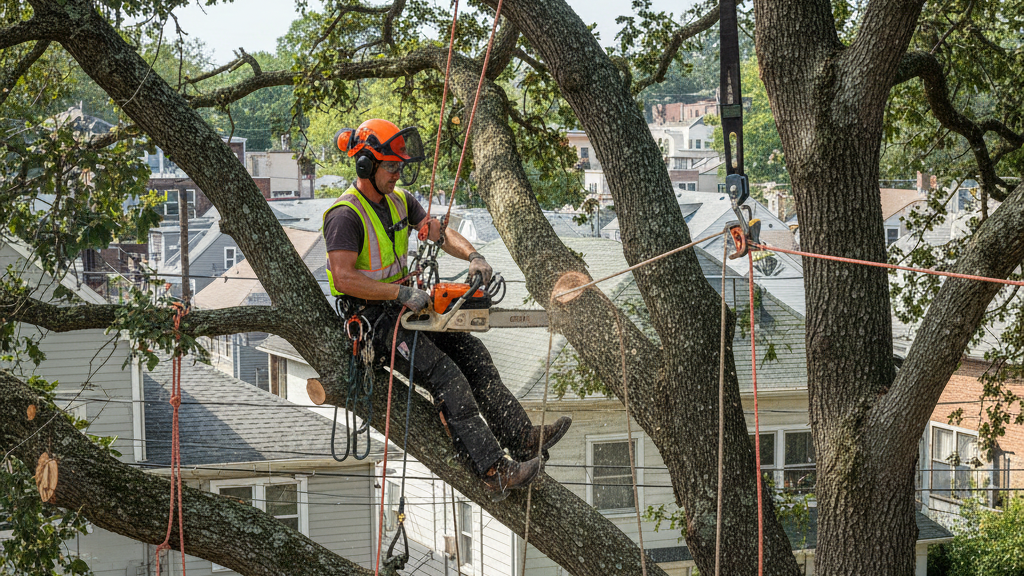
You’re often cutting wood that’s under compression and tension at the same time.
After 15 years of sectional tree cutting, I can feel when a piece is loaded before I ever cut it. That instinct only comes from time on rope.
OSHA Safety Standards in Tree Cutting
I don’t cut trees without respecting OSHA standards. Period.
OSHA exists because tree cutting is one of the most dangerous trades in America.
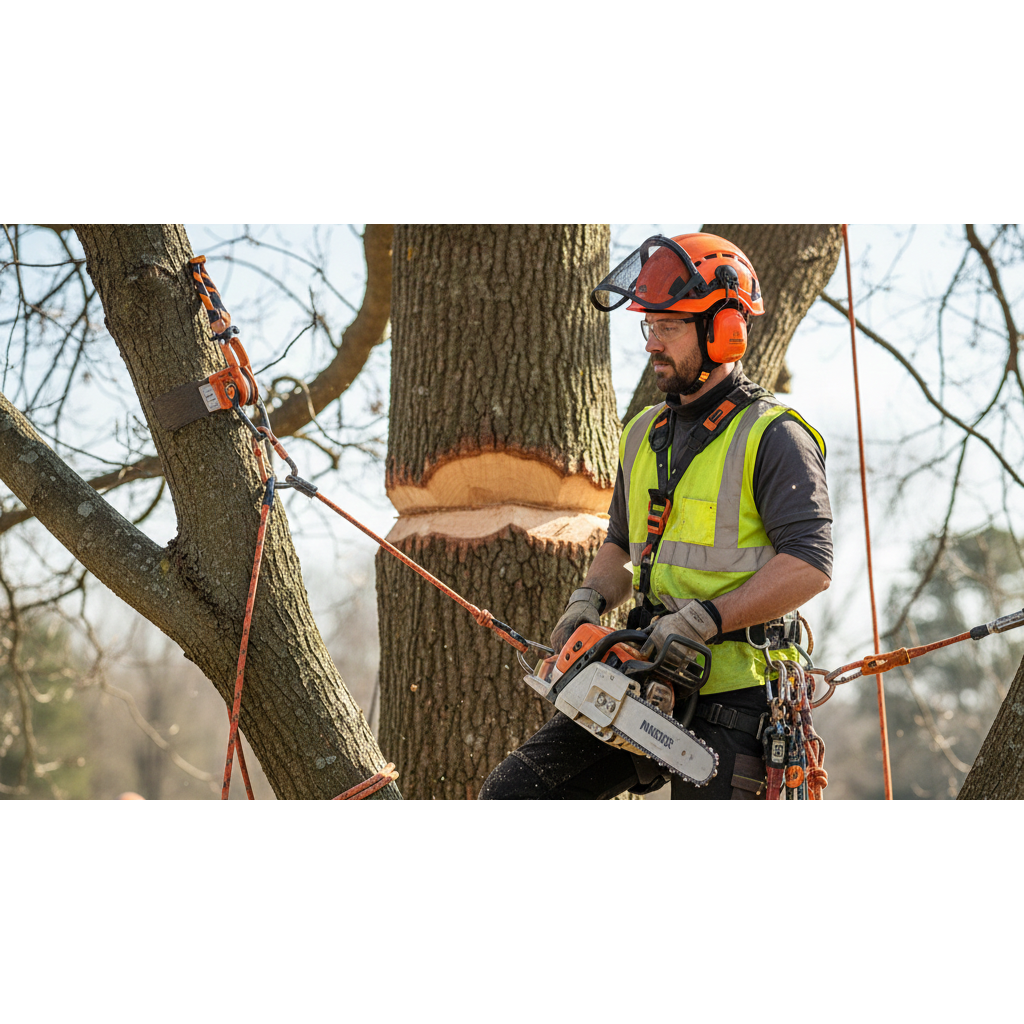
OSHA-required tree cutting safety includes:
- PPE: helmet, eye protection, chainsaw-rated pants
- Two-hand chainsaw operation
- Proper training for climbers and ground crew
- Clear communication and job briefings
In 15 years of professional tree cutting, I’ve watched OSHA rules save lives—especially during kickback incidents and rigging failures.
Safety isn’t paperwork. It’s survival.
ISA Protocols: The Professional Standard for Arborists
I also follow International Society of Arboriculture (ISA) protocols.
ISA isn’t about theory—it’s about best practices backed by real-world data.
ISA tree cutting principles focus on:
- Tree biology awareness
- Proper pruning vs removal decisions
- Structural assessment
- Risk mitigation
After 15 years working under ISA-based methods, I can tell you this:
Good tree cutting protects people, property, and the remaining landscape.
Tree Cutting Is Skilled Labor, Not “Just Hard Work”
Anyone who says tree cutting is just manual labor has never:
- Cut under tension
- Managed a failed hinge
- Lowered a 600-pound limb over a roof
- Climbed through storm-damaged wood
Tree cutting requires:
- Mechanical understanding
- Spatial awareness
- Risk assessment
- Calm decision-making
That’s why 15 years of experience matters. Skill keeps jobs clean—and keeps crews alive.
Why Experience Matters in Tree Cutting
Trees don’t follow scripts.
They crack. They barber-chair. They twist. They fail sideways.
In 15 years of tree cutting, I’ve learned to read those signs before they happen.
That’s the difference between:
- A controlled removal
- And a catastrophic failure
Tree cutting is unforgiving. Experience is the only real insurance.
Final Word from the Canopy
If there’s one thing 15 years of tree cutting has taught me, it’s this:
Respect the tree, respect the physics, and never rush the cut.
Tree cutting done right is quiet, controlled, and professional.
Tree cutting done wrong makes the news.
2 thoughts on “Tree Cutting by a Professional Arborist | 15 Years Experience”