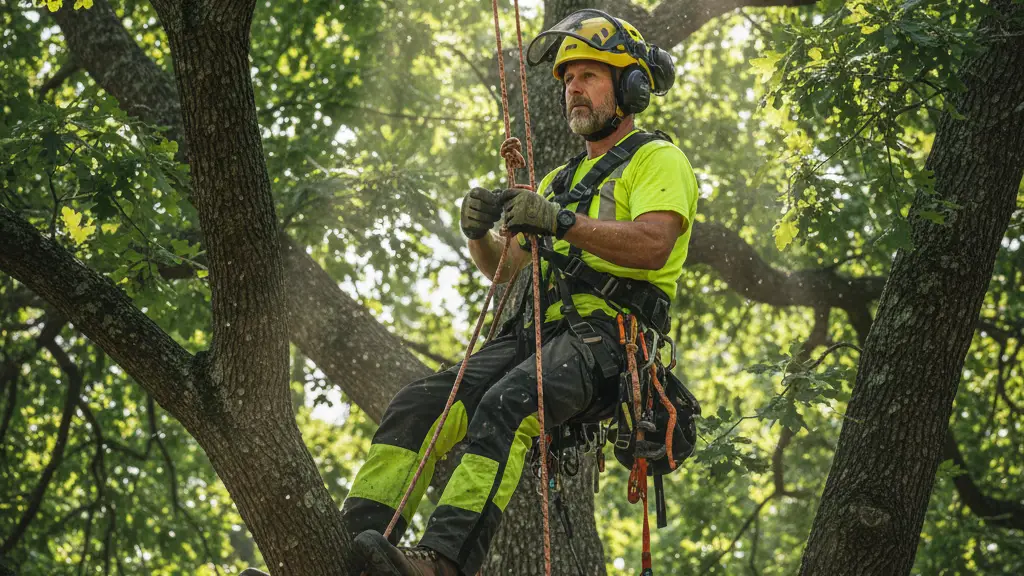
if you think tree climbing is just about throwing a rope over a branch and hauling yourself up like a kid in a backyard, you’re in for a very expensive—and potentially deadly—awakening. I’ve spent over a decade and a half in the canopy. I’ve seen the industry evolve from basic hemp ropes to high-tech mechanical ascenders, but the one thing that hasn’t changed is gravity. It doesn’t care about your experience; it only cares about your mistakes.
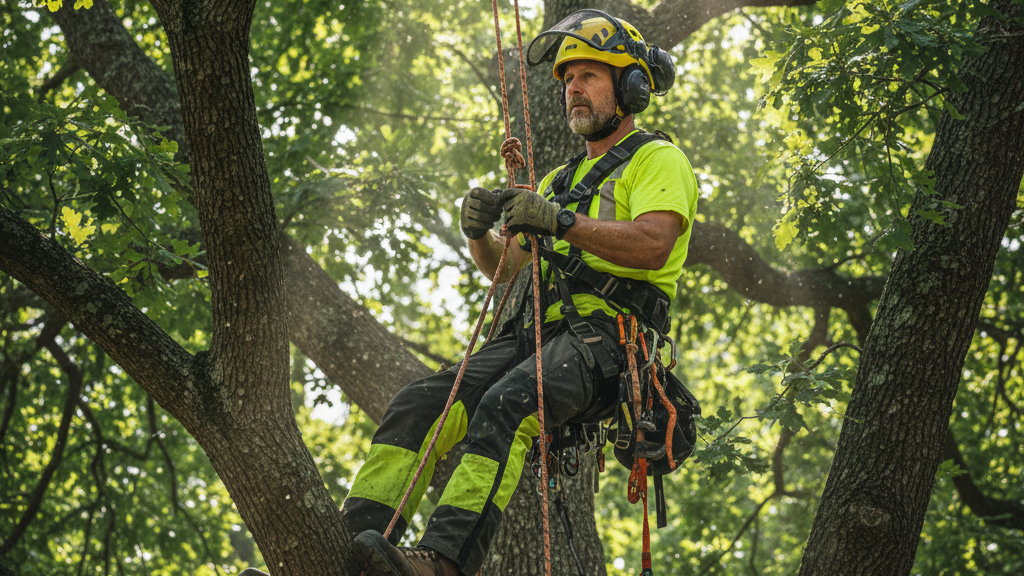
Professional tree climbing is a discipline of physics, grit, and unwavering focus. When you’re 90 feet up a White Oak with a running saw, you aren’t just a laborer. You’re a high-stakes technician.
Table of Contents
The Rules of the Game: OSHA and ISA Standards
Before we even talk about saddles or spikes, we have to talk about the law. In the US, if you aren’t playing by the rules, you’re a liability to yourself and your crew.
- OSHA 1910.268 & 1910.269: These aren’t just bureaucratic red tape. They mandate clear zones, PPE, and electrical hazard awareness. Every time I start a tree climbing session, my first check is the proximity of power lines.
- ISA Best Management Practices (BMPs): The International Society of Arboriculture (ISA) provides the roadmap for safe canopy access. Following ISA protocols means you aren’t just guessing; you’re using scientifically backed methods for tie-in points (TIPs) and weight distribution.
- ANSI Z133 Safety: This is the arborist’s bible. It covers everything from chainsaw safety to the strength requirements of your carabiners. If your gear isn’t Z133 rated, it has no business being in a tree climbing kit.
The Technical Core: Beyond the Ascent
Once you’ve mastered the art of tree climbing to get into the canopy, the real work begins. You aren’t just there for the view; you’re there to dismantle or prune.
Directional Felling from the Canopy
Sometimes you can’t drop a tree from the ground. You have to climb it and steer it down in sections.
- The Notch: Whether it’s a conventional or an open-face notch, this is your steering wheel.
- The Hinge: This is the most critical piece of wood in the industry. It guides the section until it’s clear of the climber and the targets below.
Technical Rigging and Dismantling
Tree climbing and rigging go hand-in-hand. You can’t have one without the other when removing heavy timber over a house.
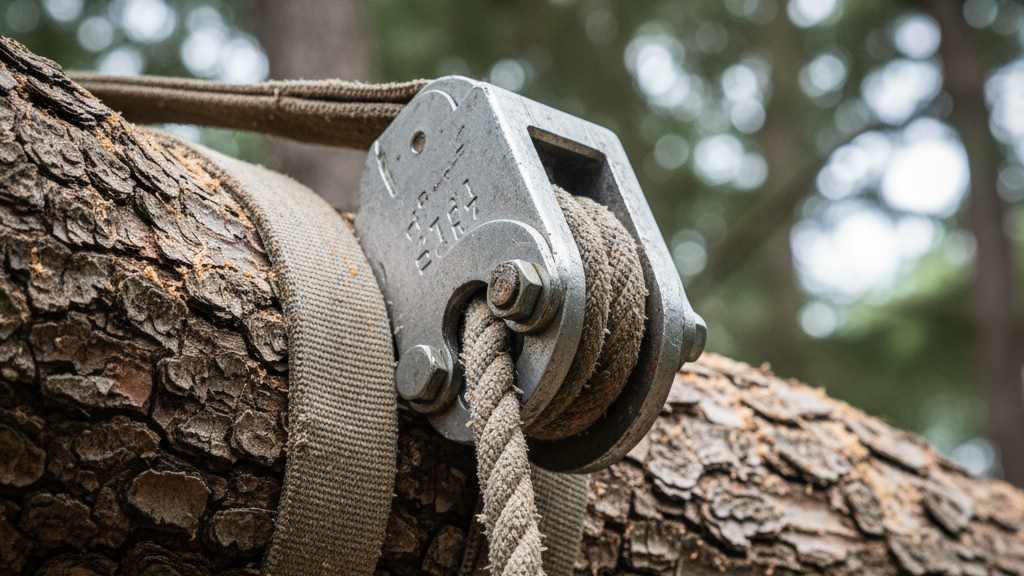
- Forces and Friction: A 500-lb log falling just 5 feet generates thousands of pounds of force. I use Port-a-Wraps at the base to ensure my ground crew has total control.
- Blocks vs. Natural Crotches: I always prefer arborist blocks. They provide consistent friction, unlike a natural crotch which can be unpredictable and damage your expensive tree climbing lines.
Advanced Tree Climbing Gear: My Lifelines
Your gear is the only thing standing between you and a very short, very fast trip to the hospital.
- Ropes: I use 24-strand braided lines for my climbing and 12-strand for my rigging. They offer the perfect balance of hand-feel and strength.
- The Saddle: A modern arborist saddle is designed to support your back and hips for 8-hour days. It’s not just a harness; it’s a mobile workstation.
- Mechanical Ascenders: While I respect the old-school hitch, tools like the ZigZag or the Akimbo have revolutionized tree climbing efficiency. They allow for smoother movement and less fatigue.
Sectional Dismantling: The “Money” Work
This is where the men are separated from the boys. Sectional dismantling requires you to be 100% comfortable with your tree climbing position while handling a chainsaw.
- Chipping the Leads: Taking the small stuff first to clear the way.
- Roping the Heavies: Using pulleys to lower massive trunk sections.
- The Final Cut: Staying tied in safely while the last piece of the “stick” comes down.
Hard-Earned Lessons: 15 Years in the Canopy
I’ve seen “cowboys” try to skip the safety checks to save ten minutes. In tree climbing, those ten minutes can cost you a lifetime.
- Communication is Key: If your ground crew can’t hear you, or doesn’t know your hand signals, the job stops.
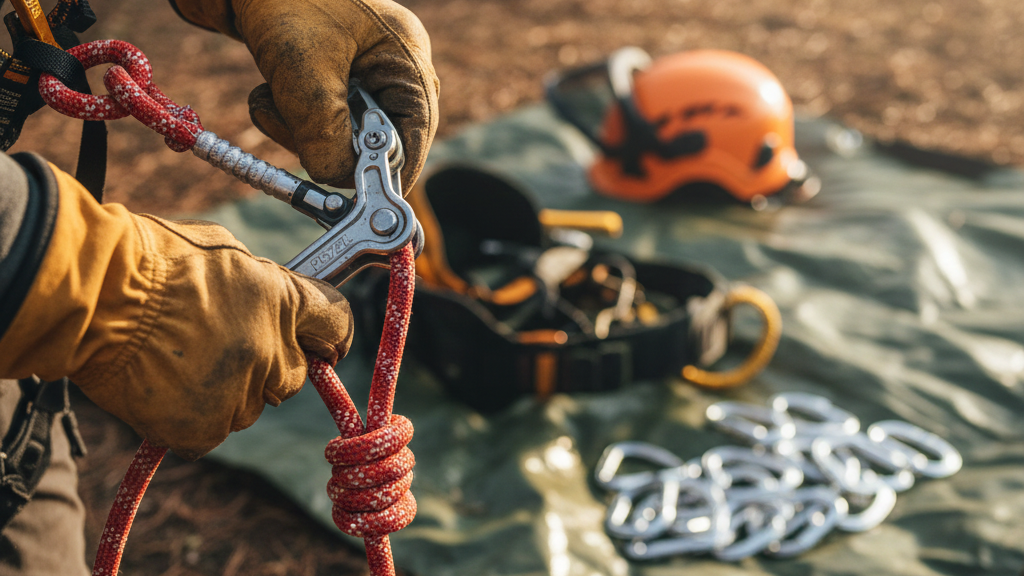
- Gear Inspection: I check every inch of my rope every single morning. A small burn or a tiny nick is an automatic retirement for that line.
Conclusion
Tree climbing is more than a job—it’s a craft. It requires a deep respect for nature and a borderline-obsessive focus on safety protocols. If you’re looking to get into this field, don’t take shortcuts. Study the ISA manuals, respect the OSHA laws, and never, ever underestimate the tree.