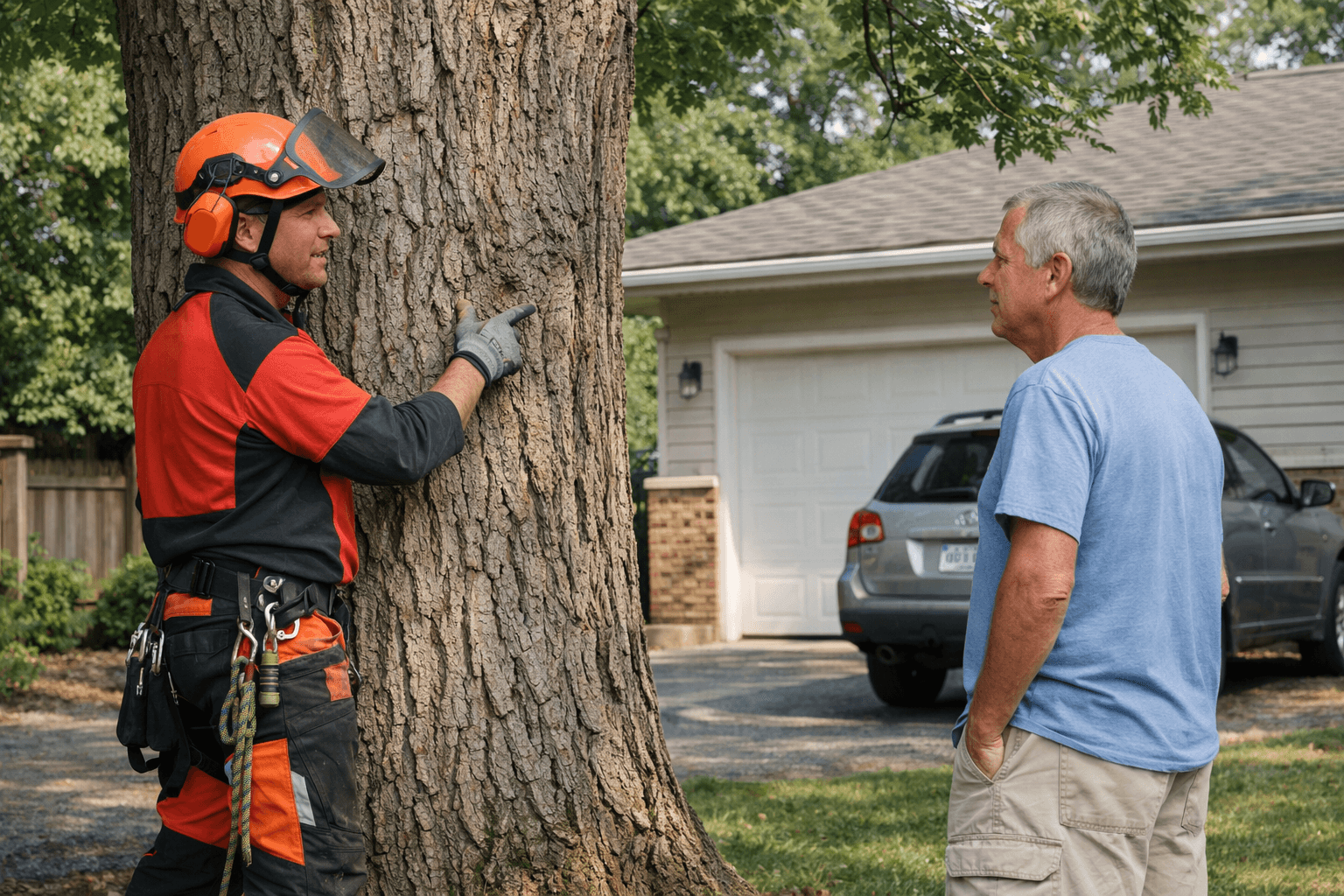
If you’re hunting for the best tree care tips to keep your backyard from becoming a disaster zone, you’ve come to the right place. I’ve spent 15 years in the saddle, and I’ve seen enough “weekend warrior” accidents to know that most people treat their trees like static lawn furniture. The truth is, trees are dynamic, living structures that require technical respect and a deep understanding of physics.
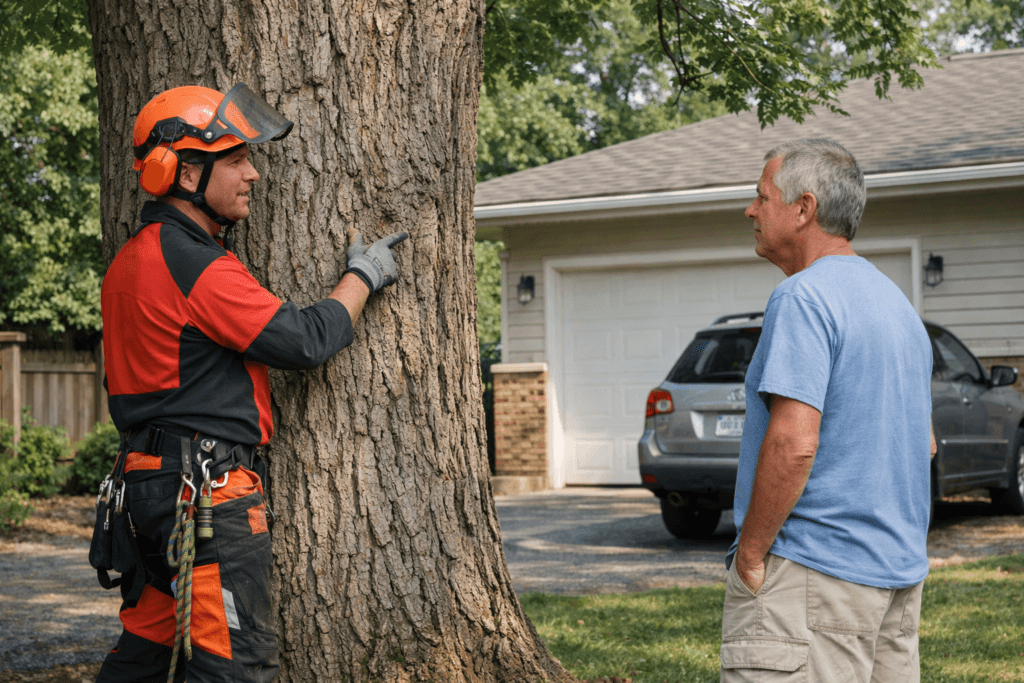
In 2026, climate shifts are making our storms more unpredictable, which means following professional tree care tips is no longer optional—it’s a necessity for property safety. Whether you are dealing with a leaning Pine or a sprawling Oak, the following guide will walk you through the professional standards of the trade.
1. Safety First: The OSHA and ISA Standard
Before you even touch a tool, you need to understand that professional tree work is governed by OSHA safety standards (specifically 1910.266) for a reason. These rules are designed to prevent the fatalities that occur when gravity takes over.
- PPE is Non-Negotiable: If you aren’t wearing a rated helmet, chainsaw chaps, and eye protection, you are ignoring basic ISA protocols.
- Ground Control: Always establish a drop zone that is at least twice the height of the tree to account for “shrapnel” on impact.
- Equipment Inspection: Every rope, carabiner, and friction device should be checked for micro-fractures before every climb.
2. Technical Rigging: Why Gravity is Your Enemy
One of the most overlooked tree care tips involves understanding how to move massive weight in tight spaces. When we dismantle a tree, we don’t just drop limbs; we manage them using technical rigging.
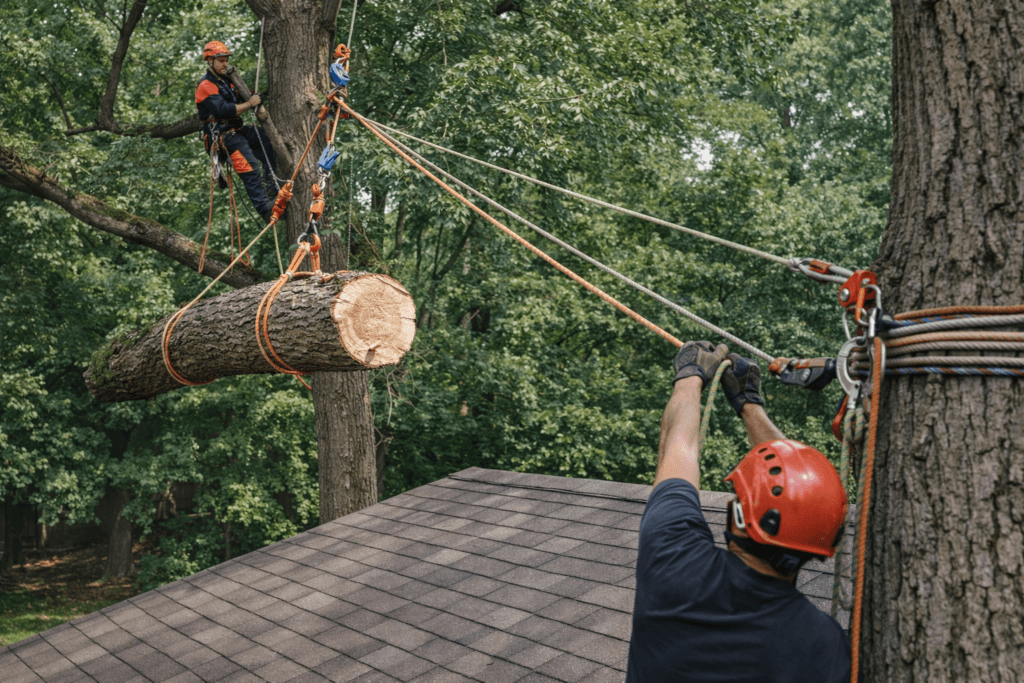
- Mechanical Advantage: We use 5:1 pulley systems to ensure a 500-pound limb doesn’t crush your roof or your crew.
- Directional Felling: We use a 70-degree open-face notch to steer the tree exactly where it needs to go.
- The Hinge: Leaving exactly 10% of the tree’s diameter as “holding wood” is a technical requirement for a safe backcut, acting as the steering wheel for the fall.
3. Identify Hazards Before They Break
My top tree care tips always include a thorough “Ground Walk”. You need to be able to spot a hazardous tree before it spots your car.
- Cankers and Cavities: Soft spots or fungal growth (mushrooms) on the bark often indicate internal rot and structural failure.
- Dead Wood: Brittle branches, also known as “widowmakers,” are notorious for snapping without any wind or warning.
- Root Heaving: If the soil is lifting at the base of the trunk, the tree’s structural anchor is failing, and it’s a high-priority removal.
4. Pruning for Longevity and Health
Don’t just “hack” at your trees; that’s how you kill them. Proper tree care tips emphasize “Target Pruning” to encourage natural healing.
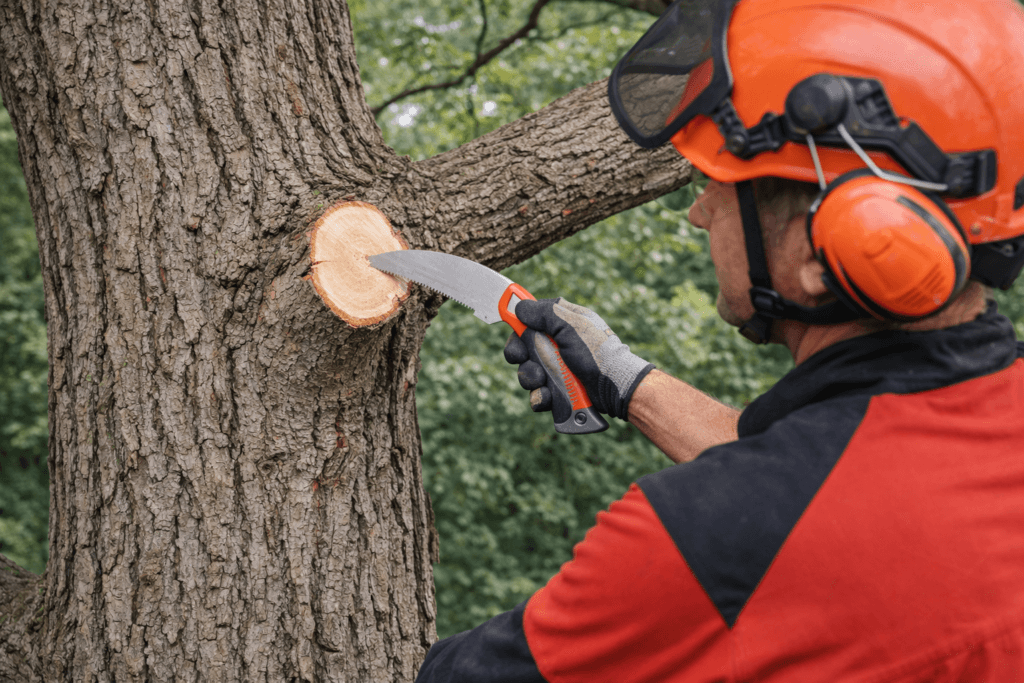
- The 25% Rule: Never remove more than 25% of the live canopy in a single season, or you risk shocking the tree into decline.
- The Branch Collar: Always make your cut just outside the branch collar—the swollen area where the branch meets the trunk—to allow the tree to “compartmentalize” the wound.
5. Trust the Professionals for High-Access Work
Whether I’m using SRT (Stationary Rope Technique) or DdRT, I’m utilizing thousands of dollars of load-tested gear designed for high-angle work. The most important of all tree care tips is knowing your limits.
- The “Kill Zone”: Working under a tree while someone is cutting is a major violation of ISA protocols.
- High-Tension Lines: If a tree is within 10 feet of a power line, it is a specialized job that requires specific certifications.
Tree care is about more than just a sharp chain; it’s about respecting the life of the tree and the safety of everyone on the ground. By following these tree care tips, you ensure that your property remains a safe haven rather than a hazard zone.
1 thought on “10 Essential Tree Care Tips Every Homeowner Needs in 2026”