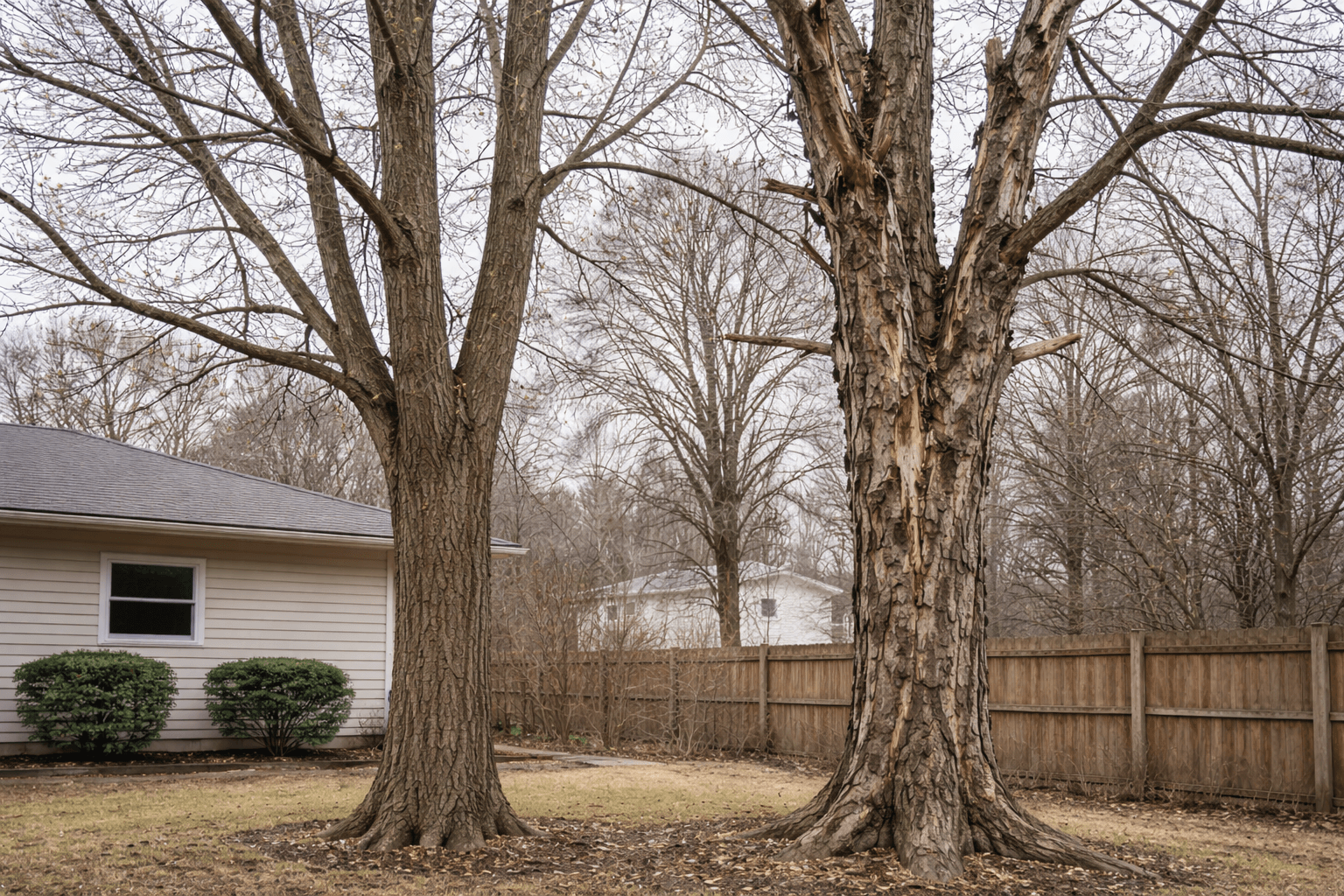
When winter hits, every tree looks like a skeleton, and for most homeowners, that’s when the panic sets in. One of the most common questions I get after 15 years in the field is: “Alex, is my tree dead, or is it just sleeping?” Providing the right tree care tips starts with knowing the difference between a tree in dormancy and a tree that’s ready for the woodchipper.
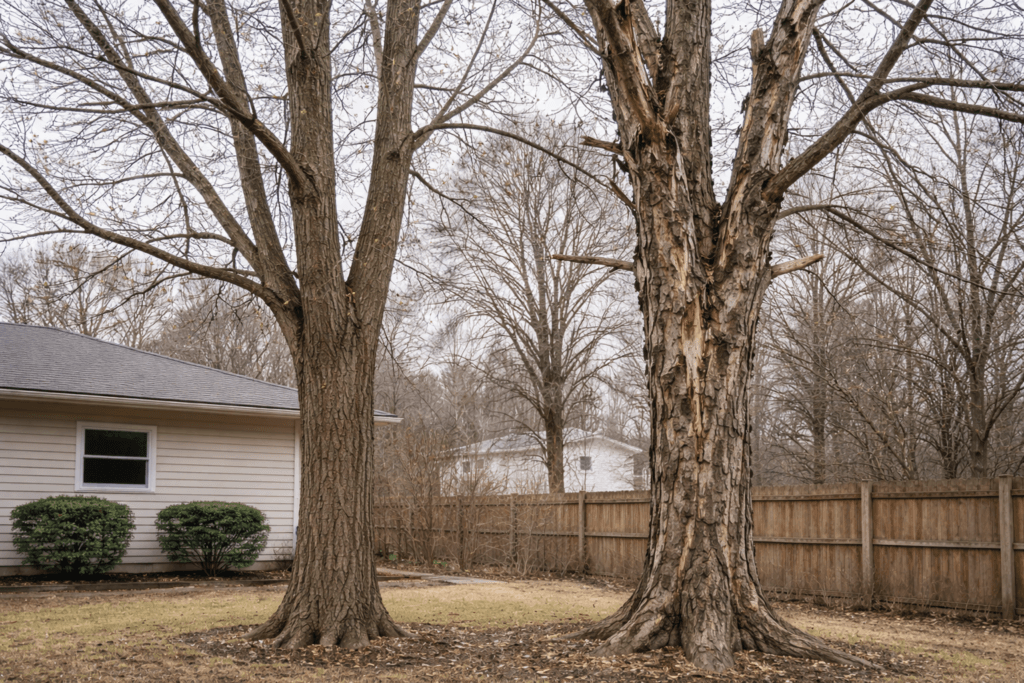
In 2026, with shifting weather patterns, trees are entering dormancy at odd times. Misidentifying a dead tree as dormant is a massive safety risk, especially if that tree is hanging over your roof.
The Scratch Test: The Simplest of All Tree Care Tips
If you want a definitive answer, you have to look beneath the surface. This is one of those classic tree care tips that never fails.
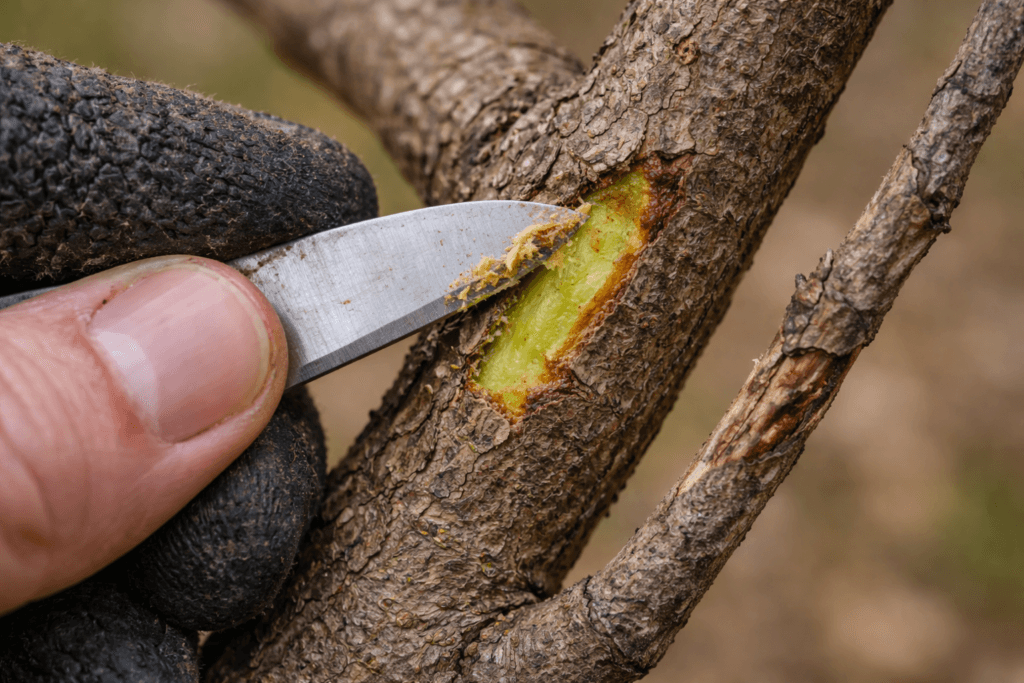
- The Technique: Use your thumbnail or a small pocketknife to gently scratch a small strip of bark off a young twig.
- The Result: If it’s green and moist underneath, the tree is dormant and full of life. If it’s brown, brittle, and dry, that specific limb is dead.
- Pro Tip: Perform this test in several spots. A tree can have dead limbs but still have a living trunk.
Inspecting Buds and Bark Integrity
A dormant tree is still actively preparing for spring. When I’m performing a technical evaluation, I look for “Vitality Signals.”
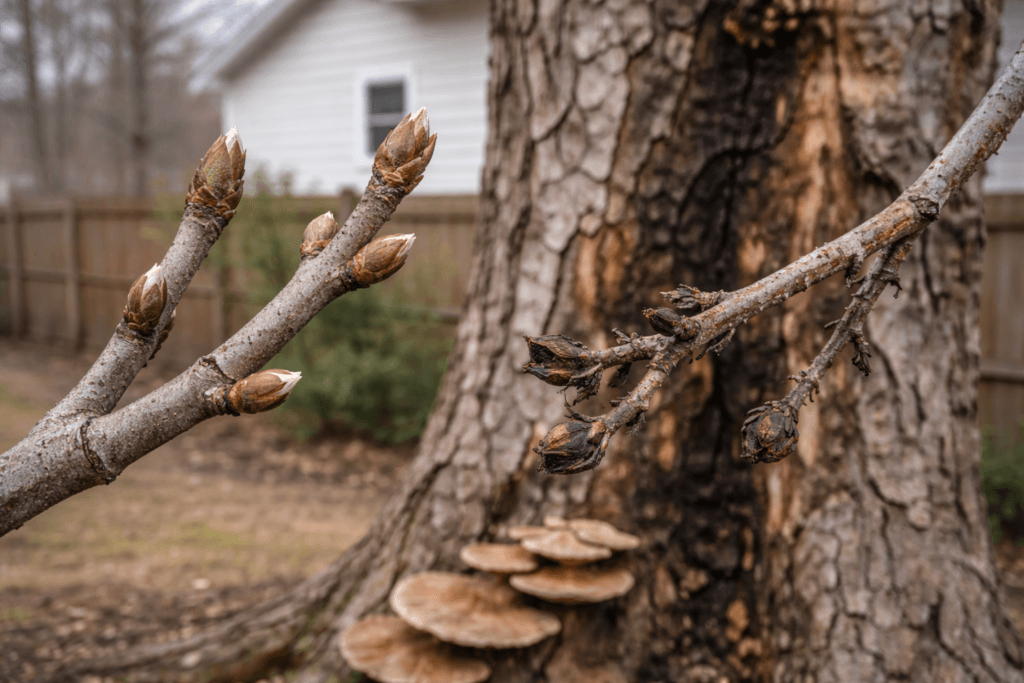
- Bud Health: Look at the tips of the branches. Dormant trees have small, firm buds waiting to bloom. If the buds are shriveled or absent, you’re likely looking at a dead specimen.
- Bark Clinging: Healthy trees hold their bark tight. If large sheets of bark are falling off and the wood underneath is smooth or rotting, that’s a red flag for a hazard tree.
- Fungal Growth: Mushrooms growing out of the side of the trunk are a sure sign of internal decay. No amount of tree care tips can save a tree once the structural heartwood is rotted out.
Safety Protocols and Professional Standards
Identifying a dead tree isn’t just about aesthetics; it’s about following OSHA safety standards (1910.266). Dead trees, or “snags,” are incredibly unpredictable.
- The Danger of Brittle Wood: Dead wood has zero elasticity. When we use rigging systems to dismantle these trees, the wood can snap under tension without warning.
- ISA Protocols: Certified arborists use the “Tie-In-Twice” rule when climbing dead wood to ensure if one anchor point fails, the climber is still protected.
- Directional Felling: Felling a dead tree is twice as dangerous as a living one because the “hinge” wood is often rotten. We often use 5:1 mechanical advantage pull lines to force the tree down safely.
When to Call the Pro
The best tree care tips are the ones that keep you out of the hospital. If your tree fails the scratch test or is dropping large limbs, it’s time to stop being a “weekend warrior” and call in someone with the right gear. Whether we use SRT (Stationary Rope Technique) for quick access or complex rigging for a dismantle, our goal is to keep your property safe.