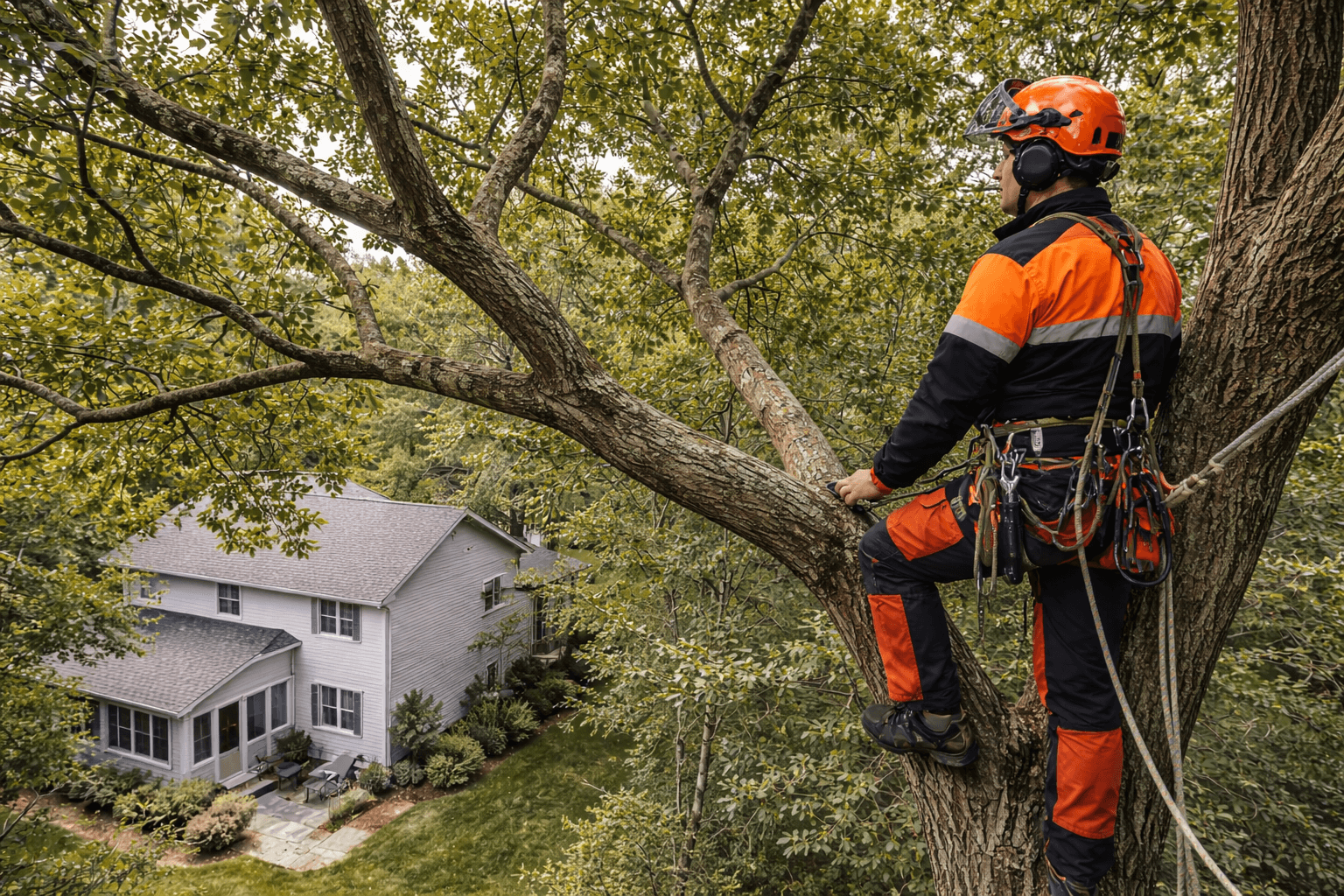
Structural Tree Trimming is the only thing standing between your roof and a 10-ton oak limb when a storm hits. Look, I’ve spent 15 years hanging from a saddle, and if there’s one thing I’ve learned, it’s that a tree is like a high-rise building—if the skeleton is weak, the whole thing is coming down when the wind starts howling. Most folks think trimming is just about making things look “pretty,” but true Structural Tree Trimming is about architecture and survival. After a decade and a half of storm cleanup, I can tell you exactly which trees are going to fail just by looking at their skeletal frame.
Table of Contents
Mastering Structural Tree Trimming: A Veteran’s Blueprint for Stability
Structural Tree Trimming is the process of training a tree to be strong, resilient, and balanced. It’s not about hacking off branches; it’s about directing growth and managing weight distribution so the tree can handle the stresses of nature. When I get up in a canopy, I’m looking at the “bones” of the tree, identifying the weak points before they become headlines.
The “Why” Behind Structural Tree Trimming
In my 15 years, I’ve seen too many “lion’s tailed” trees—where some amateur stripped all the inner growth, leaving heavy tufts at the tips. That’s a death sentence in a windstorm.
- Load Distribution: By thinning the right areas, we allow wind to pass through the canopy instead of hitting it like a solid sail.
- Weight Management: Long, over-extended limbs are leverage for gravity; Structural Tree Trimming reduces that leverage by bringing the center of mass closer to the trunk.
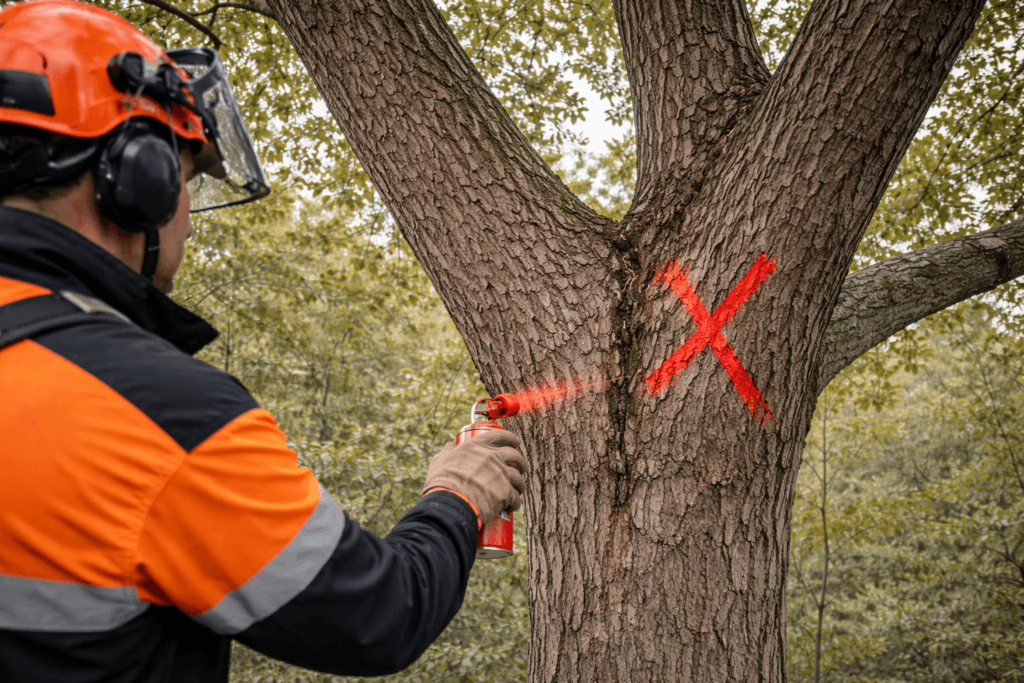
- Co-dominant Stems: I look for those “V-shaped” unions where two trunks compete; if we don’t manage one of them early, the tree is eventually going to split right down the middle.
Safety Standards: OSHA and ISA Protocols
We don’t play games when we’re 80 feet up. Safety isn’t a suggestion; it’s the law.
- OSHA 1910.266: These federal standards are the bedrock of our safety, mandating that we identify hazards like electrical lines and structural rot before we even touch a saw.
- ISA Best Practices: The International Society of Arboriculture (ISA) gives us the technical roadmap for Structural Tree Trimming, ensuring we aren’t just cutting, but caring for the tree’s long-term health.
- ANSI A300: This is the American standard for pruning; it tells us that “topping” a tree is a crime against biology and a guaranteed way to create a future hazard.
My Strategic Process for Structural Success
When I’m in the canopy, I follow a specific mental checklist to ensure the tree comes out stronger than I found it.
- Identify the Leader: A strong tree needs one dominant central trunk; I prune back the “competitors” to give that main leader the light it needs.
- Clear the Low-Hangers: I remove the low, heavy limbs that interfere with structures or pedestrians, but I do it without stripping the trunk bare.
- The 25% Rule: I never remove more than a quarter of the foliage in a single season; the tree needs its “solar panels” to recover from the stress of the cuts.
The Long Game: Preventing Storm Failure
Storms don’t kill trees; bad architecture does. Through Structural Tree Trimming, we are essentially “storm-proofing” your property.
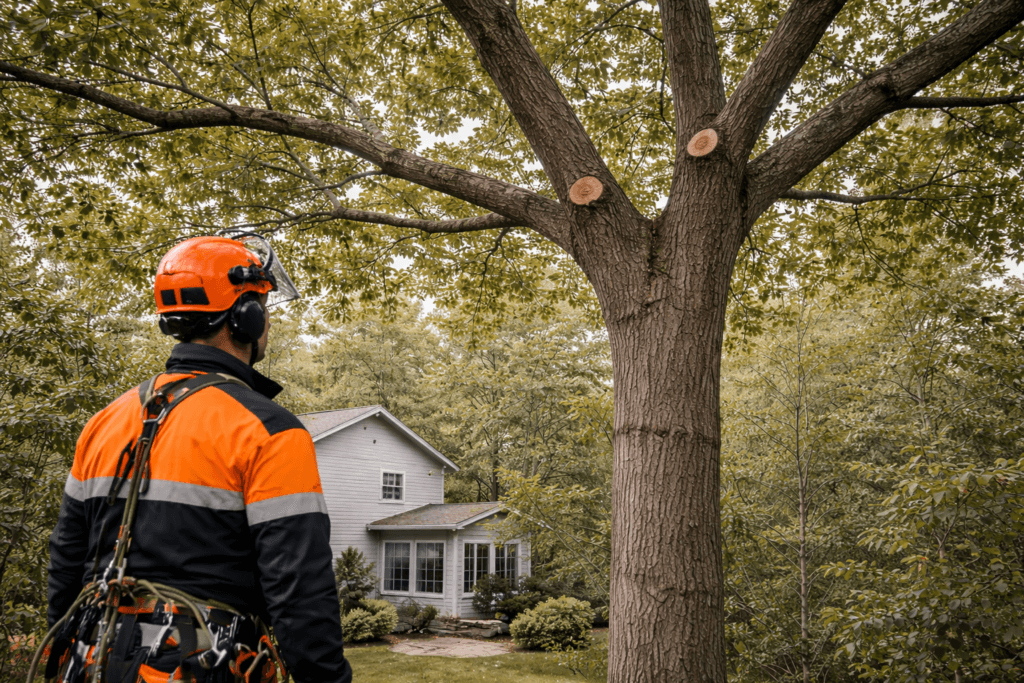
- By removing dead, diseased, or crossing branches, we stop rot before it enters the heartwood.
- Properly spaced branches create a balanced canopy that sways with the wind instead of snapping against it.
- In 15 years, I’ve never seen a well-maintained, structurally-pruned tree fail under a normal snow load.