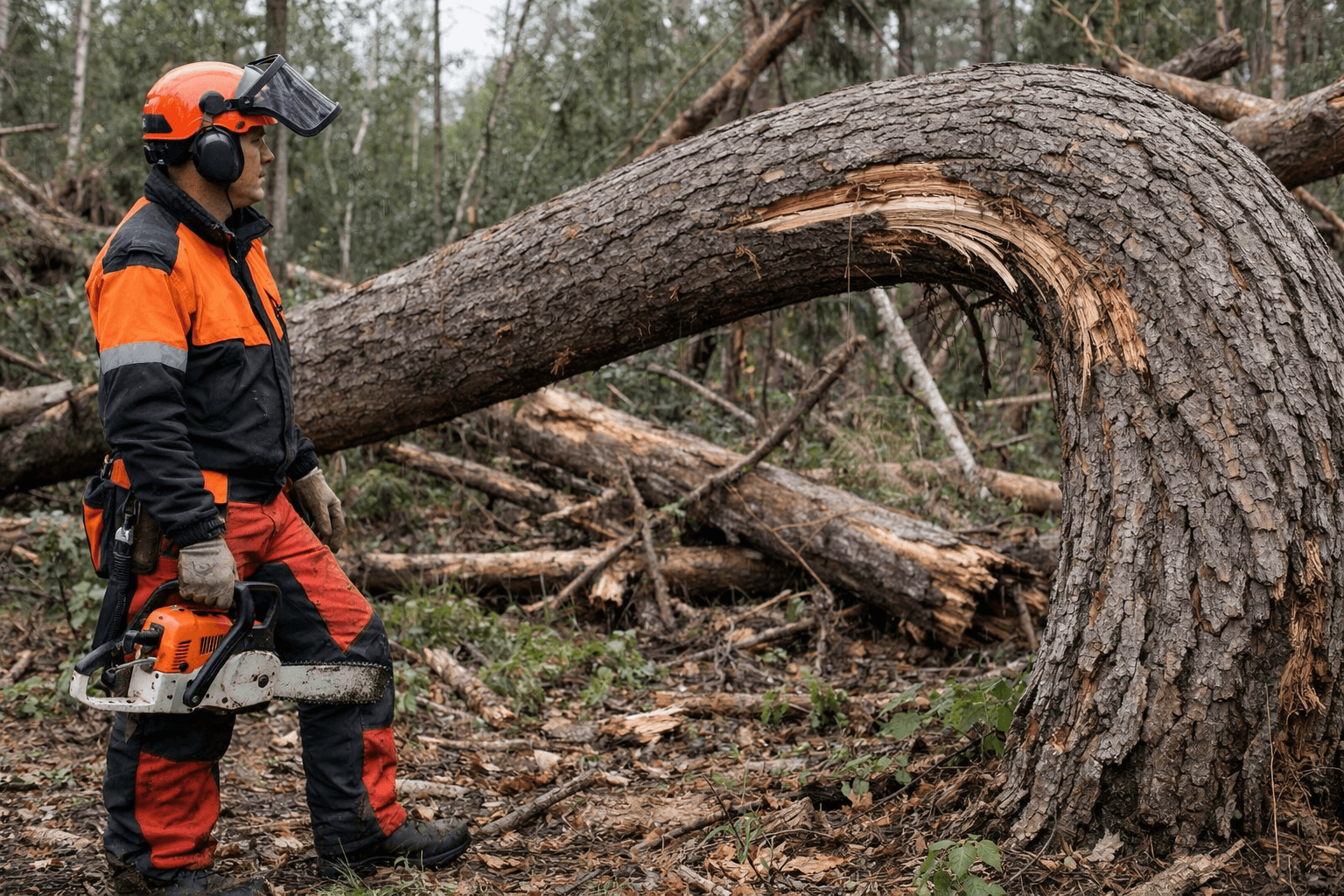
Spring Poles & Barber Chairs are the two most lethal energy-traps you will encounter in professional tree work. If you’ve spent 15 years in the dirt and the canopy like I have, you know that tree cutting isn’t just about making backcuts and watching things fall. It’s about recognizing the “loaded springs” that are waiting to kill you. In this industry, nothing is more terrifying for a ground worker or a feller than dealing with Spring Poles & Barber Chairs without a technical plan.
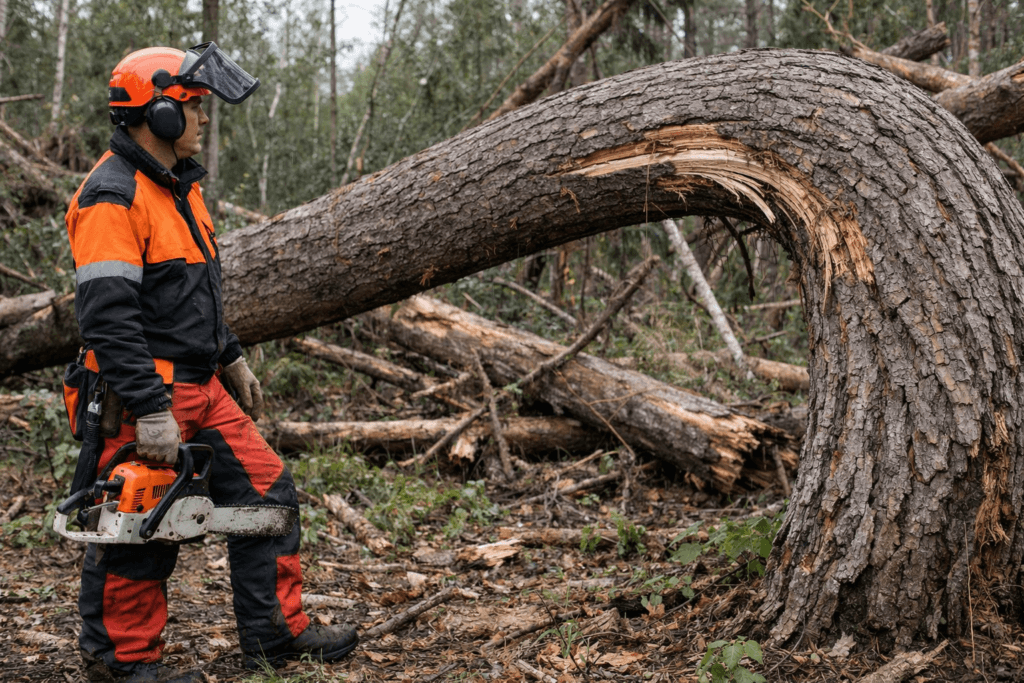
Mastering Spring Poles & Barber Chairs: A Veteran’s Safety Guide
Spring Poles & Barber Chairs represent the most volatile energy you will ever encounter in the woods. After 15 years of storm cleanup, I can tell you that a tree under tension is a loaded gun with a hair-trigger. If you don’t know how to release that energy safely, you shouldn’t be holding a saw. Understanding the mechanics of Spring Poles & Barber Chairs is the difference between a successful job and a catastrophic injury.
Understanding the Danger of Spring Poles
A spring pole occurs when a tree or branch is bent over under the weight of another tree or debris, creating massive stored energy.
- The Trap: When you cut into the “belly” (the underside) of a spring pole, the wood can split and strike you with the force of a sledgehammer.
- Energy Release: The goal is to release the tension in small increments, not all at once, to prevent a sudden snap-back.
- Safe Positioning: I never stand on the inside of the bend or directly in the path where the pole will snap back because it moves faster than human reflexes.
- The Shave Technique: We often use a series of small, shallow notches on the underside of the bend to slowly bleed off the energy, which is a recognized OSHA-compliant method.
The Lethal Physics of Barber Chairs
A barber chair is a vertical split of the tree trunk that occurs during the felling process, usually before the backcut is even finished.
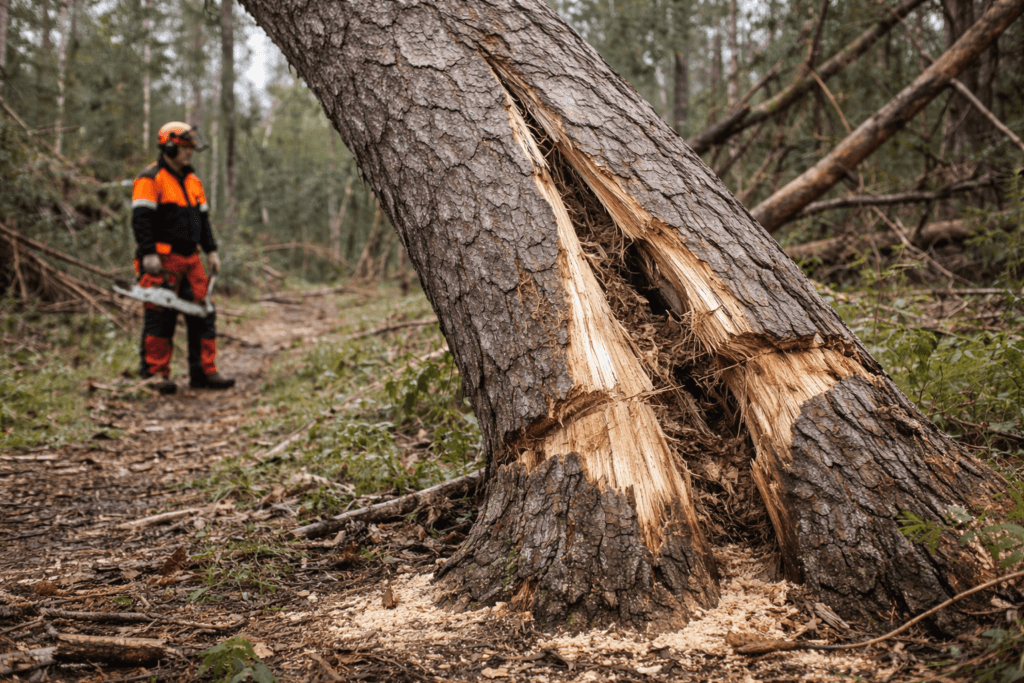
- The Cause: This usually happens in trees with a heavy forward lean or internal rot where the wood fibers cannot hold the tension.
- The Impact: The wood fibers at the back of the tree snap upward while the front falls forward, causing the back half of the trunk to kick backward with lightning speed.
- Lethal Force: This kickback often strikes the feller in the upper body or face, making Spring Poles & Barber Chairs some of the most feared hazards in forestry.
- Prevention: In 15 years, I’ve learned that you must use a “bore cut” (plunge cut) to leave a strap of holding wood at the back, which prevents the tree from splitting prematurely.
OSHA and ISA Protocols for High-Tension Trees
We follow OSHA 1910.266 because it saves lives, period.
- Clear Retreat Path: Before you touch a tree that looks like it might barber chair, you need two clear retreat paths at a 45-degree angle to the rear.
- Hazard Assessment: ISA protocols require a 360-degree inspection of the “lean” and the canopy to check for “widowmakers” that might fall when the tension is released.
- Energy Management: Professional arborists treat Spring Poles & Barber Chairs as high-energy systems that require a written or mental felling plan before the saw is ever started.
Technical Rigging to Neutralize Tension
Sometimes, the safest way to handle Spring Poles & Barber Chairs is to not stand near them at all.
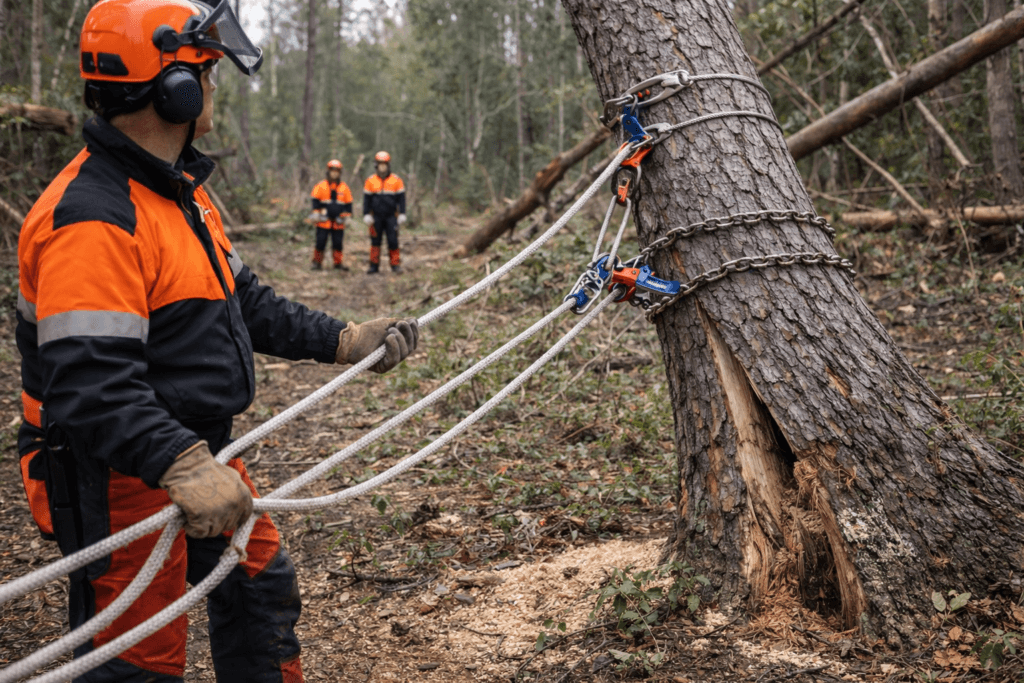
- Remote Pulling: Use a high-tensile bull rope and a redirect to pull the spring pole from a safe distance using a truck or a specialized rigging winch.
- Binding the Trunk: If I suspect a tree will barber chair, I use heavy-duty log chains or ratchet straps to bind the trunk together above the cut.
- Mechanical Advantage: This forces the tree to hold together until the hinge does its job, neutralizing the risk of a vertical split.