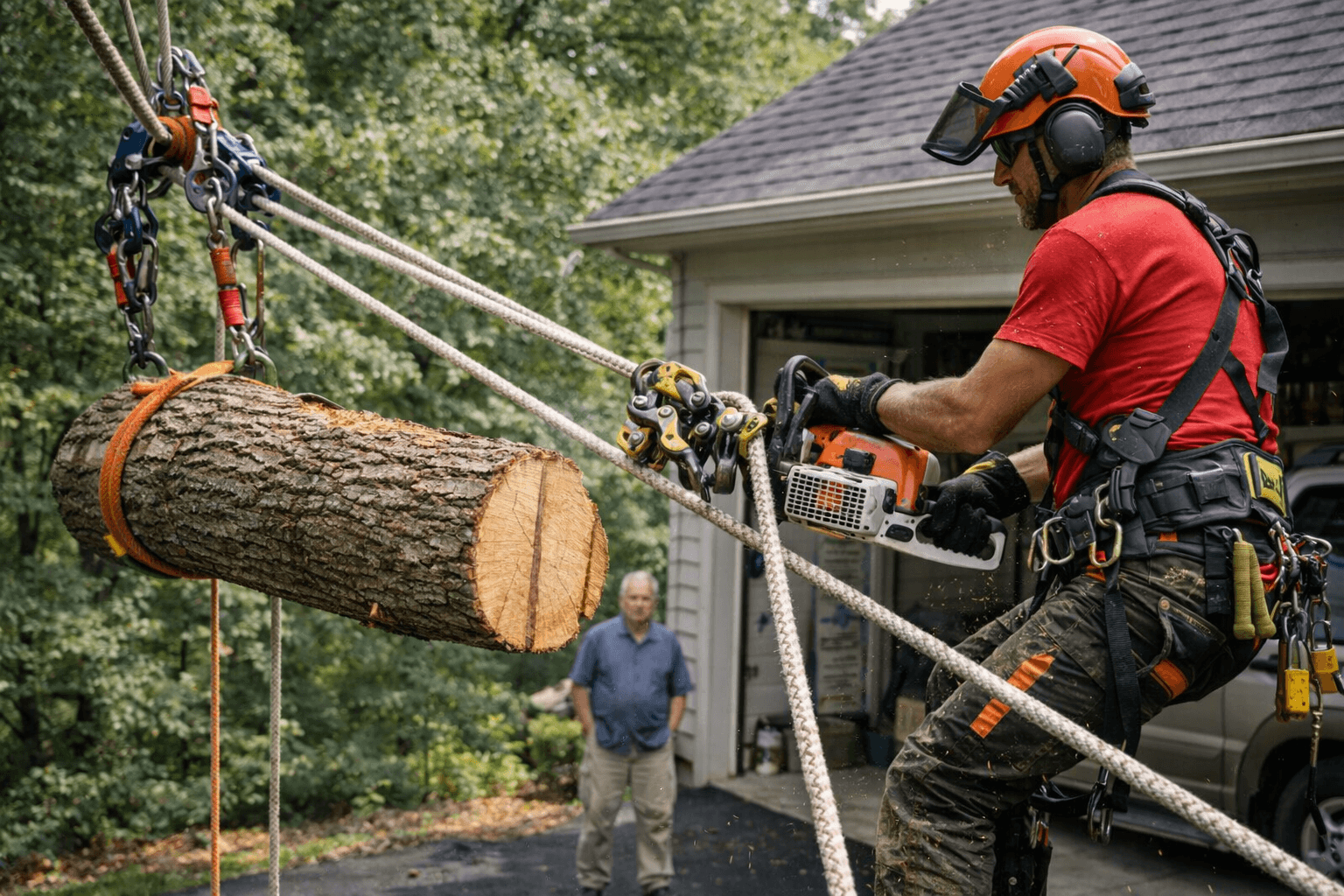
If you are looking for the most critical tree care tips to protect your property, here is the cold, hard truth: most homeowners wait until a crisis to think about their canopy. I get it. You see a dead limb hanging over your driveway or a Pine that’s leaning a little too close to the master bedroom, and you think, “I’ve got a chainsaw and a ladder; how hard can it be?” Well, after 15 years of cleaning up the messes made by homeowners who thought the same thing, I’m here to tell you: Tree care is a high-stakes game of physics, and gravity doesn’t take days off.
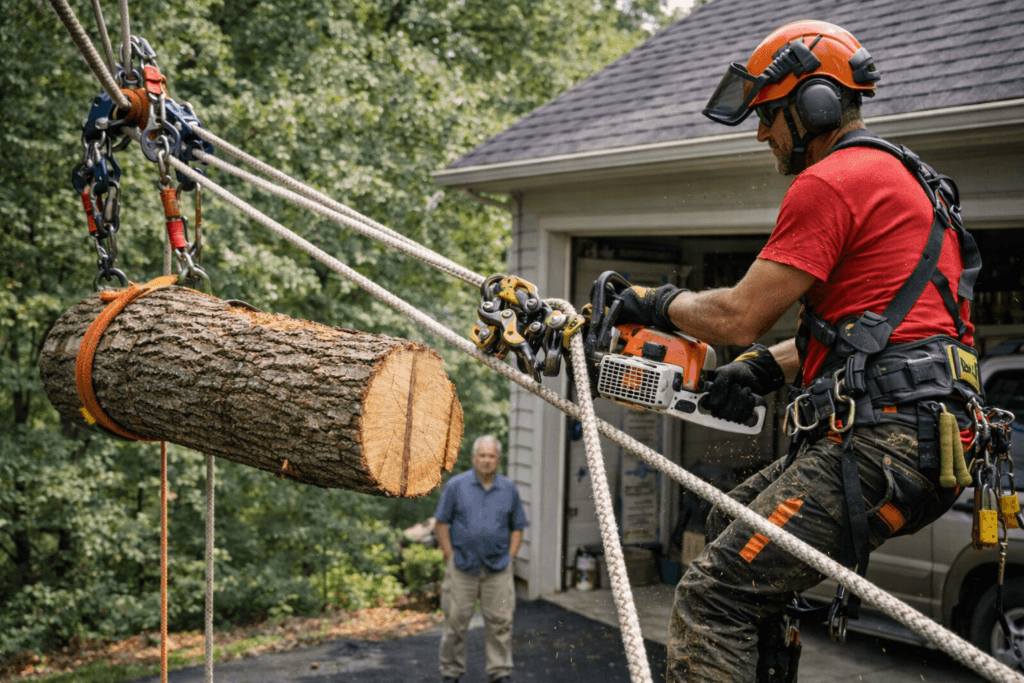
When you’re looking for the best tree care tips, the first one—the one that will actually save your life—is knowing exactly when to put the saw down and call a pro. It’s about ego. People think a saw makes them a lumberjack. But out here in the real world, 2026 has given us better gear, lighter saws, and more data than ever before, but a three-ton section of Oak is just as heavy and just as lethal as it was a century ago.
Gravity doesn’t give a damn about your “new gear.” If you don’t understand load distribution and reactive forces, that tree is going to own you.
The Reality of OSHA Standards and Your Safety
Most people don’t realize that professional arboriculture is governed by strict OSHA safety standards (specifically 1910.266) and ISA protocols. These aren’t just “suggestions.” They are blood-bought rules designed to keep us alive.
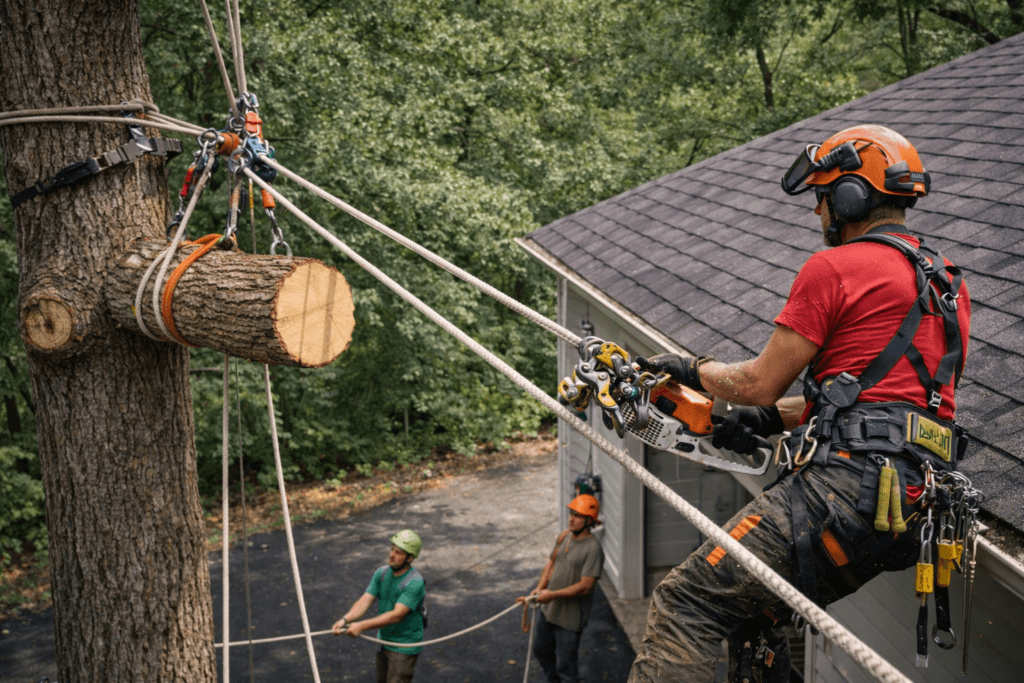
- PPE (Personal Protective Equipment): If you aren’t wearing chainsaw chaps, a rated climbing helmet, and eye protection, you aren’t doing “tree care”—you’re just being reckless.
- The Danger Zone: Professionals establish a drop zone that is twice the height of the tree. Most residential yards don’t even have that much space.
- Tie-in Points: We use load-tested anchor points. A ladder leaned against a rotting trunk is a death trap.
Technical Dismantling: It’s Not Just “Timber!”
When I go into a backyard for a technical tree removal, I’m not just felling a tree; I’m dismantling a multi-ton puzzle in mid-air.
Directional Felling
This is where the science happens. We don’t just “cut and hope.”
- The Notch: We use a 70-degree open-face notch to give the tree a “hinge” that guides it exactly where we want it.
- The Backcut: We leave a specific amount of “holding wood” to act as a steering wheel.
- Wedge Work: In 2026, we use high-impact wedges to force a tree against its natural lean.
Advanced Rigging and Rope Work
If the tree is over your roof, we can’t just drop it. We use mechanical advantage in tree rigging—specifically 5:1 systems—to catch and lower limbs that weigh more than your car. Using blocks, pulleys, and friction devices, we can move heavy timber with inches of clearance.
Identifying Hazardous Trees: Expert Insights
One of the most important tree care tips I can give you is learning how to “read” your trees.

- The Root Flare: If you see fungus (mushrooms) growing at the base, the heartwood is likely rotting.
- Co-dominant Stems: “V-shaped” unions are weak points. In a high wind, these act like a giant lever, splitting the tree in half.
- Dead Wood: If a limb has no bark, it’s brittle. Brittle wood doesn’t bend; it snaps without warning.
Why Alex Tree Climber Focuses on Technical Safety
My 15 years in the saddle have taught me that the “cheap” guy is usually the most expensive in the long run. When you hire a pro, you’re paying for the ISA protocols that protect your home and our lives. We use SRT (Stationary Rope Technique) to access the canopy quickly and safely, minimizing the time spent in the “kill zone”.
Tree care isn’t just about cutting; it’s about preservation and risk management. Respect the tree, respect the gear, and for heaven’s sake, stay off the ladders with a running saw.
1 thought on “Tree Care Tips: The Danger of DIY Tree Cutting 2026”