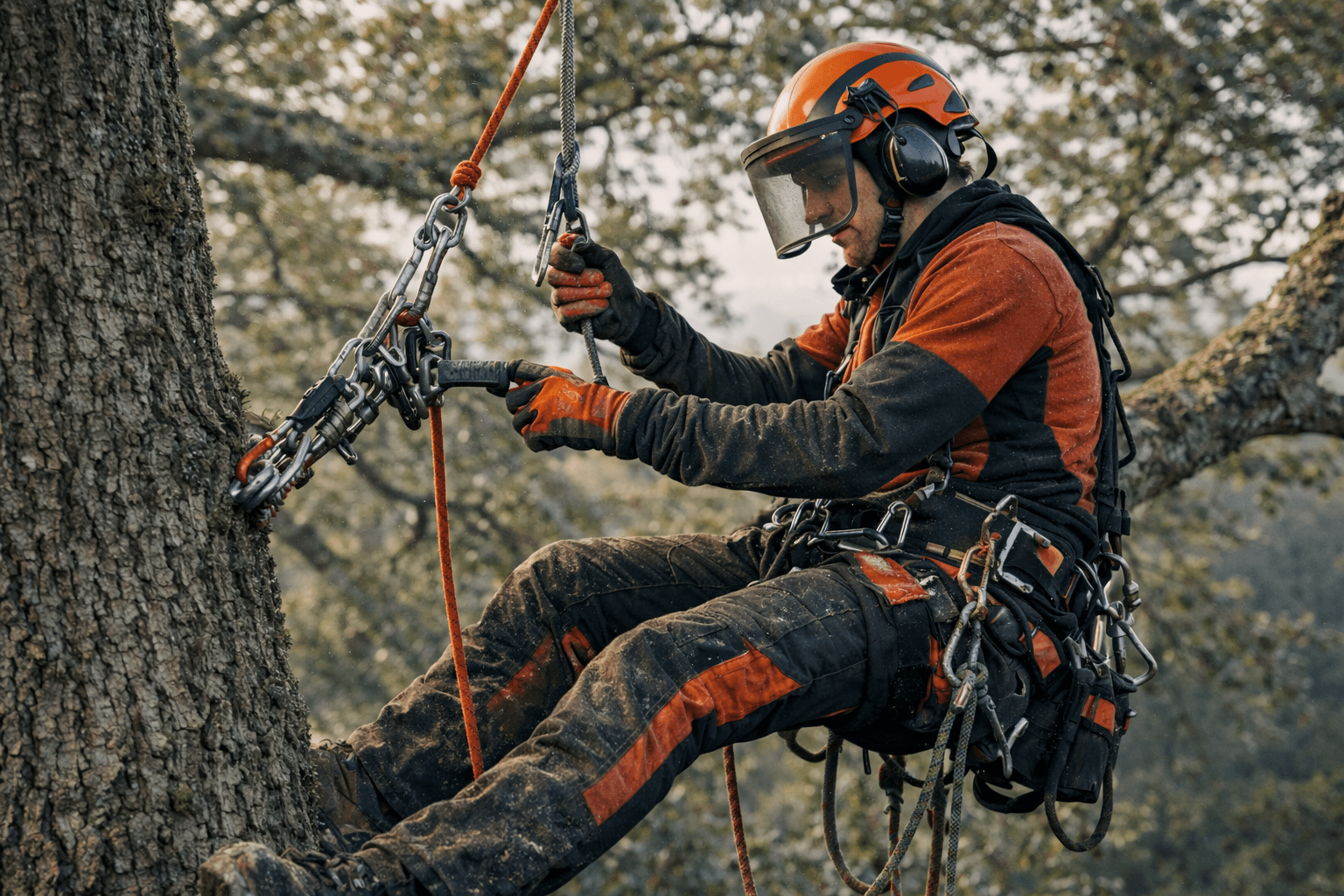
Listen, I’ve spent 15 years hanging from a saddle, and I’ve seen how Fatal Climbing Mistakes often start with shiny new gear and old-fashioned complacency. I’ve seen the industry change from old-school hemp ropes to high-tech SRT kits, but here’s the gritty truth…
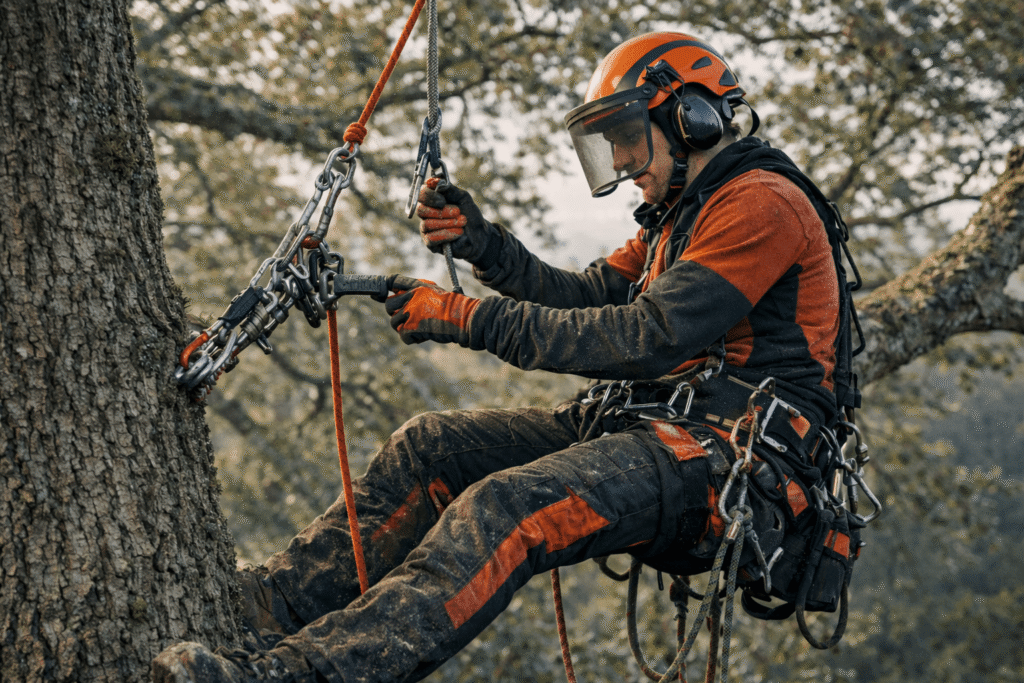
I’m not here to give you a textbook lecture. I’m here to tell you why the equipment you trust with your life might be the very thing that sends you to the trauma ward because you forgot the fundamentals of professional arboriculture.
Table of Contents
1. The “Shiny Gear” Complex and the Death of Inspection
I see it every day on job sites—young climbers buying $500 mechanical friction devices and thinking they’ve bought invincibility. They think the tech replaces the technique. It doesn’t.
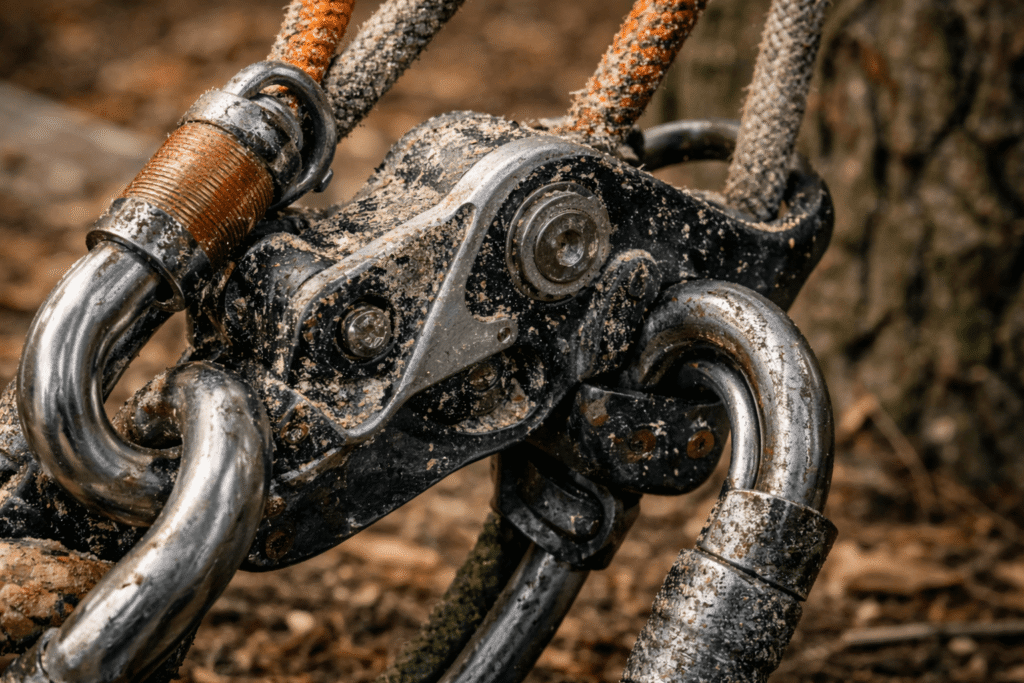
- The Inspection Gap: OSHA protocols require a meticulous daily inspection of all life-support systems, but most climbers skip it if the gear “looks” new or was expensive.
- Contamination Kills: A single grain of abrasive sand or a drop of bar oil in a mechanical cam can lead to a catastrophic slide during a high-descent maneuver.
- The Cross-Loading Nightmare: I’ve seen high-end, triple-action carabiners fail because they were cross-loaded during a complex rigging operation. Metal is strong, but it’s designed to take force in a specific direction.
2. The Fatal Miscalculation in Directional Felling
When you’re doing directional felling, your saw, your chain, and your body have to work as one synchronized unit.
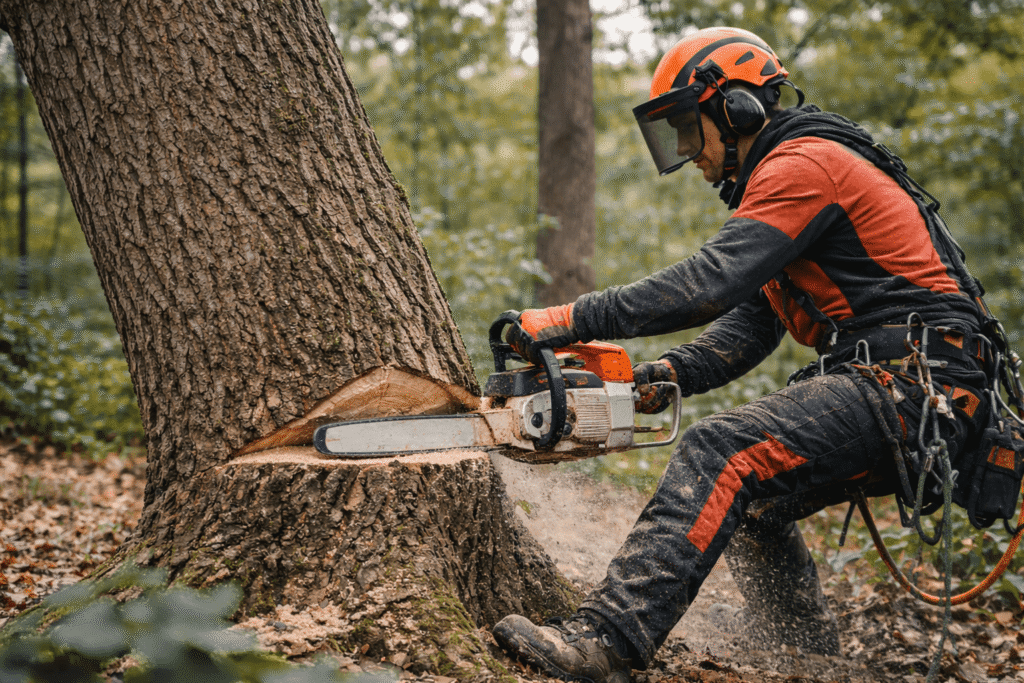
- Tension is Life: As we discussed before, a loose chain isn’t just a nuisance; it’s a liability. If that chain jumps the bar while you’re deep in your back-cut, you lose your timing.
- The Kill Zone: Losing your timing means you’re stuck in the “kill zone” of a 10-ton stick that’s already starting to move.
- Hinge Integrity: ISA protocols emphasize hinge wood integrity. If you cut through your hinge because you were fighting a sloppy saw, you’ve surrendered all control over where that tree lands.
3. High-Angle Rigging: The Physics of Failure
In dismantling and rigging, we often push our hardware to the absolute breaking point. This is where the most “viral” accidents happen, and usually, it’s preventable.
- Shock-Loading the Spar: When you drop a heavy lead into a rigging block without enough “run,” you create a shock-load that can snap a top-tier bull rope like a rubber band.
- The Friction Fallacy: We use friction brakes and port-a-wraps for a reason—to keep the heat and force off the climber’s tie-in point.
- Communication Breakdown: 15 years has taught me that if the ground crew and the climber aren’t speaking the same language, someone is going home in an ambulance. Your gear is only as good as the man holding the other end of the rope.
4. Why We Advocate for ANSI Z133 (And You Should Too)
We share this information for educational and informational purposes only. But the reality is that these safety standards weren’t written in a cozy boardroom; they were written in the blood of climbers who didn’t make it home.
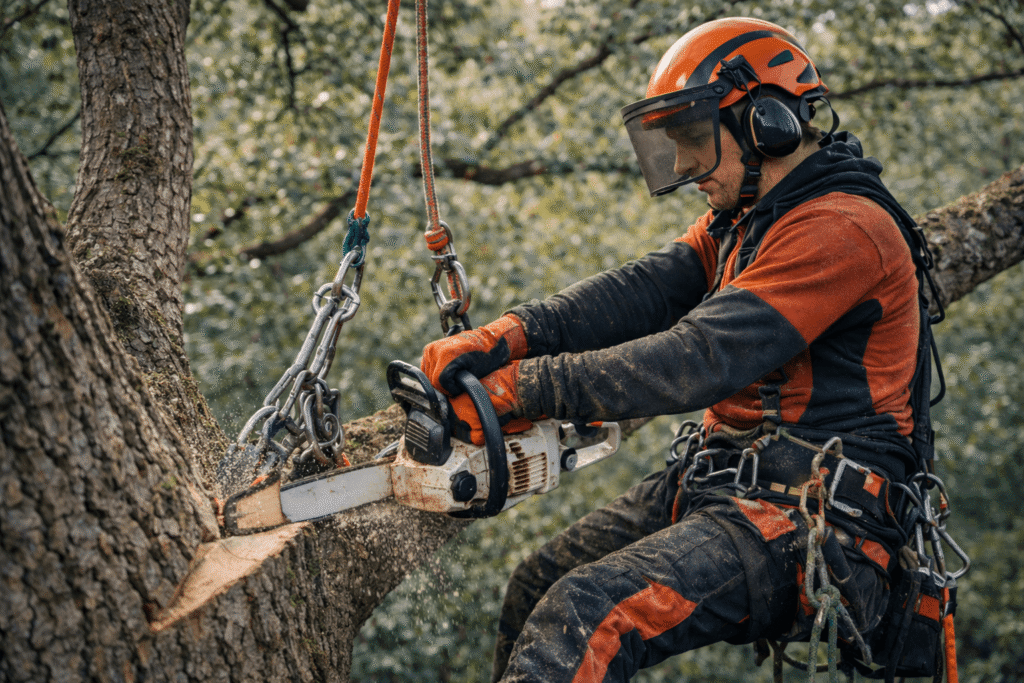
- Double Tie-In Rule: Never, and I mean never, use a chainsaw in the canopy without being tied in at two separate points. It’s a simple rule that 80% of “experienced” guys ignore until they cut their own flip-line.
- Hazard Assessment: Before your spurs even touch the bark, you need a full 360-degree hazard assessment. Are there power lines? Is there root rot? Is the tree brittle?.
1 thought on “Fatal Climbing Mistakes: Why Your Gear Might Kill You”