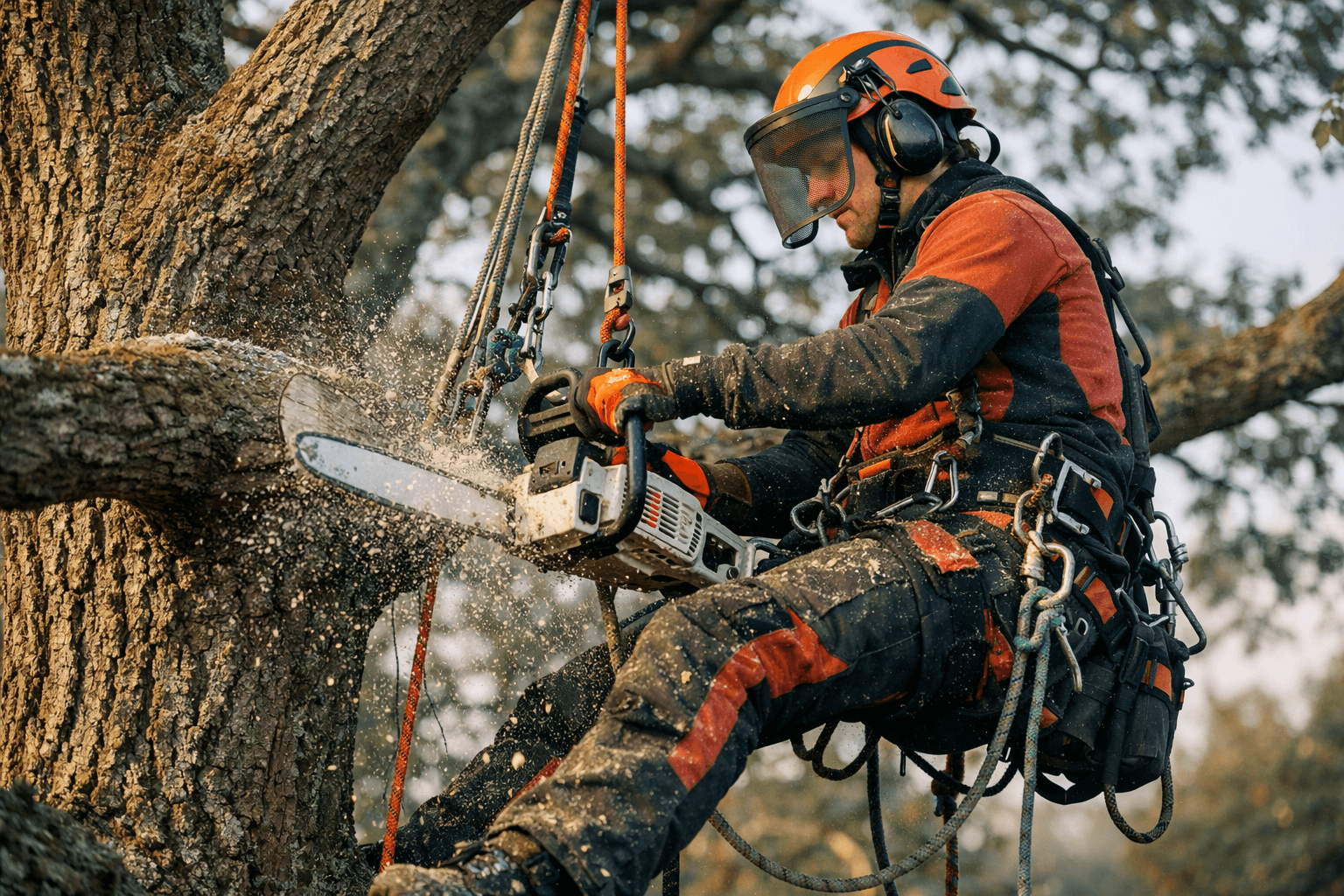
In the world of arboriculture, we talk a lot about the big stuff: high-angle rigging, technical felling, and the latest SRT gadgets. But if you want to know what separates the seasoned pros from the guys who are just “getting by,” look at their saw. Specifically, look at their Chainsaw Tension. After 15 years hanging from a saddle, I’ve realized that a sagging chain isn’t just a sign of a lazy climber; it’s a liability that can turn a routine dismantle into a life-threatening situation.
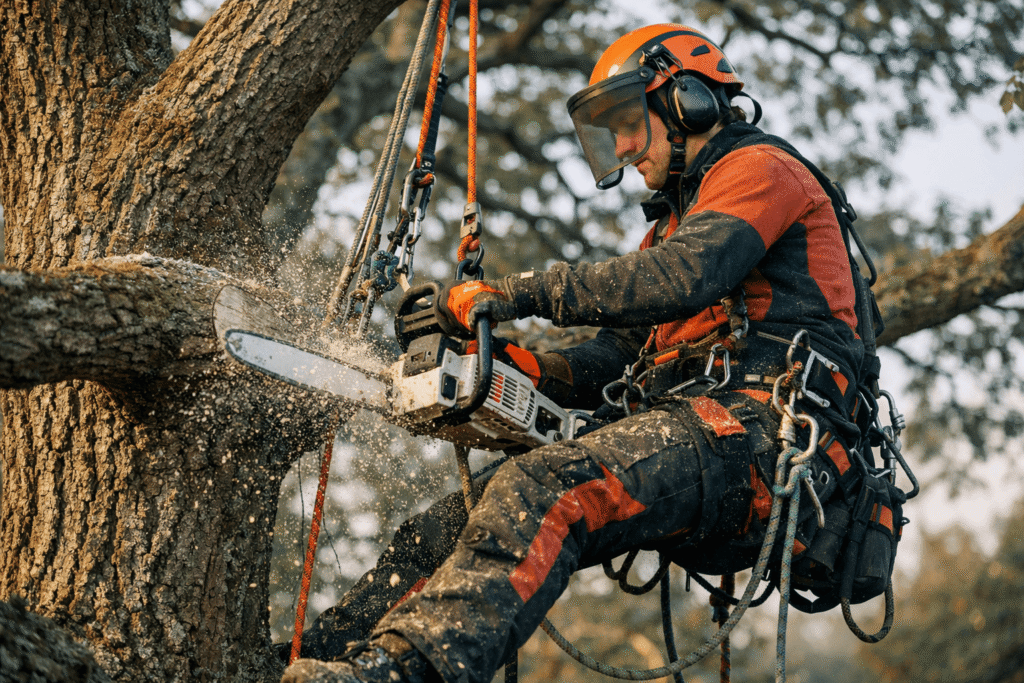
I’ve spent over 15 years in the canopy, navigating the complex structures of massive oaks and the brittle, unpredictable nature of dead ash trees. If there’s one absolute truth I’ve learned while suspended 60 feet in the air, it’s that neglected Chainsaw Tension isn’t just a minor technical inconvenience—it’s a ticking time bomb waiting to go off at the worst possible moment. In our industry, the margin for error is razor-thin, and the tools we use are as dangerous as the heights we climb. Whether you’re limbing out a massive lead or making that final, critical precision back-cut during a complex dismantle, your Chainsaw Tension dictates your personal safety, your saw’s mechanical longevity, and your mental focus.
Table of Contents
The “Goldilocks” Zone: Why Tightness Isn’t Always Rightness
Most beginners think that if a chain is tight, it’s safe. That’s a dangerous myth. If your chain is too tight, you’re putting massive stress on the crank bearing and the sprocket. It’s like driving your truck with the parking brake halfway on; something is going to get hot, and something is going to break.
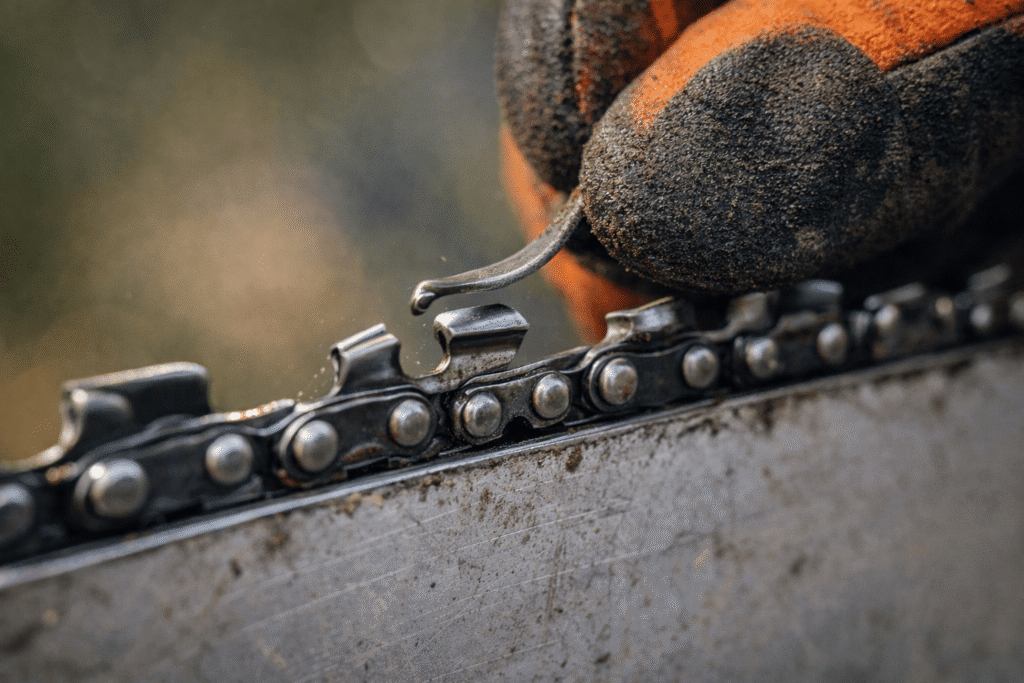
On the flip side, a loose chain is a “throw” waiting to happen. When that chain jumps the bar at 13,000 RPM, it’s not just a mechanical failure; it’s a shrapnel event.
The Real-World Risks of Poor Tension
1. The Kickback Factor
We advocate for ANSI Z133 safety standards because they save lives. A loose chain increases the risk of the cutters grabbing the wood unevenly, which can trigger a violent kickback. In a bucket or hanging from a saddle, you don’t always have the perfect leverage to fight that force.
2. Heat: The Silent Killer of Bars
A chain that’s too tight creates friction. Friction creates heat. Heat destroys the tempering of your bar. If you see your bar turning blue or the rails starting to mushroom, your tension is likely the culprit. You’re literally cooking your equipment from the inside out.
3. Precision in the Cut
Precision felling requires a saw that tracks straight. If your chain is sloppy, it’ll wander in the kerf. This ruins your hinge and turns a controlled drop into a guessing game. In this business, we don’t guess.
The “Snap-Test” Protocol
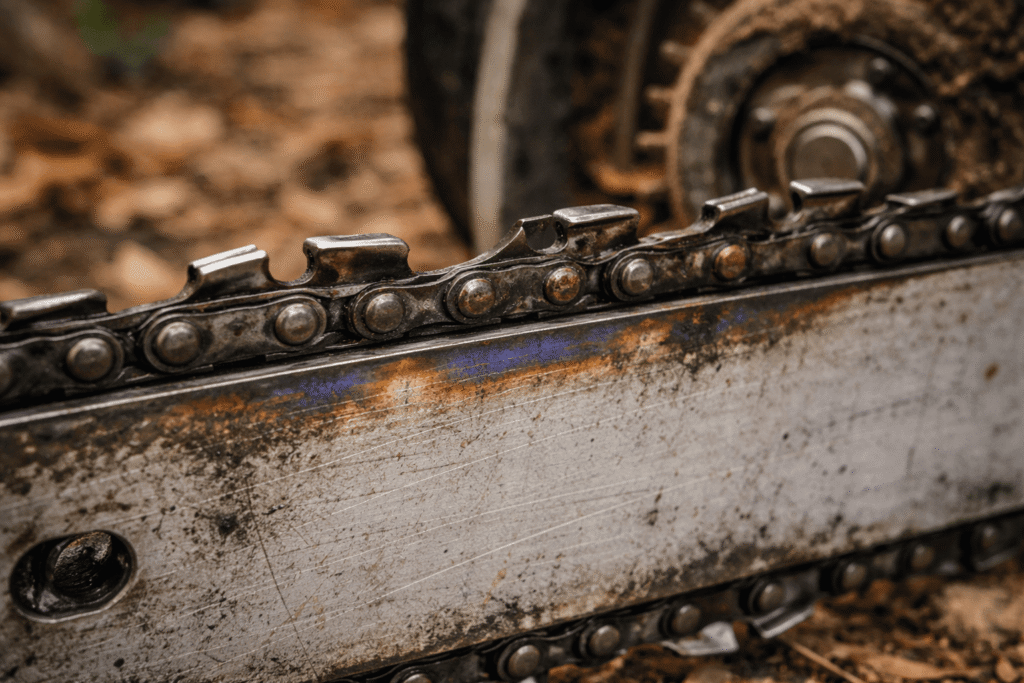
So, how do you know it’s right? Forget the fancy gauges. Use the Snap-Test:
- Pull the chain down in the middle of the bar until the drive links are just exposed.
- Let it go. It should snap back into the rail crisply.
- It should move freely around the bar by hand (wear gloves, obviously) without binding.
Maintenance is a Mindset
Maintaining your gear isn’t just about the mechanics; it’s about the culture of safety. When you take the 30 seconds to adjust your tension before a cut, you’re telling your crew—and yourself—that you respect the tool and the risk.
We share this info for educational purposes because we want every climber to go home at the end of the day. Don’t let a 10-cent adjustment be the reason for a million-dollar accident.
1 thought on “Chainsaw Tension: 7 Critical Reasons It Can Save Your Life on the Job”