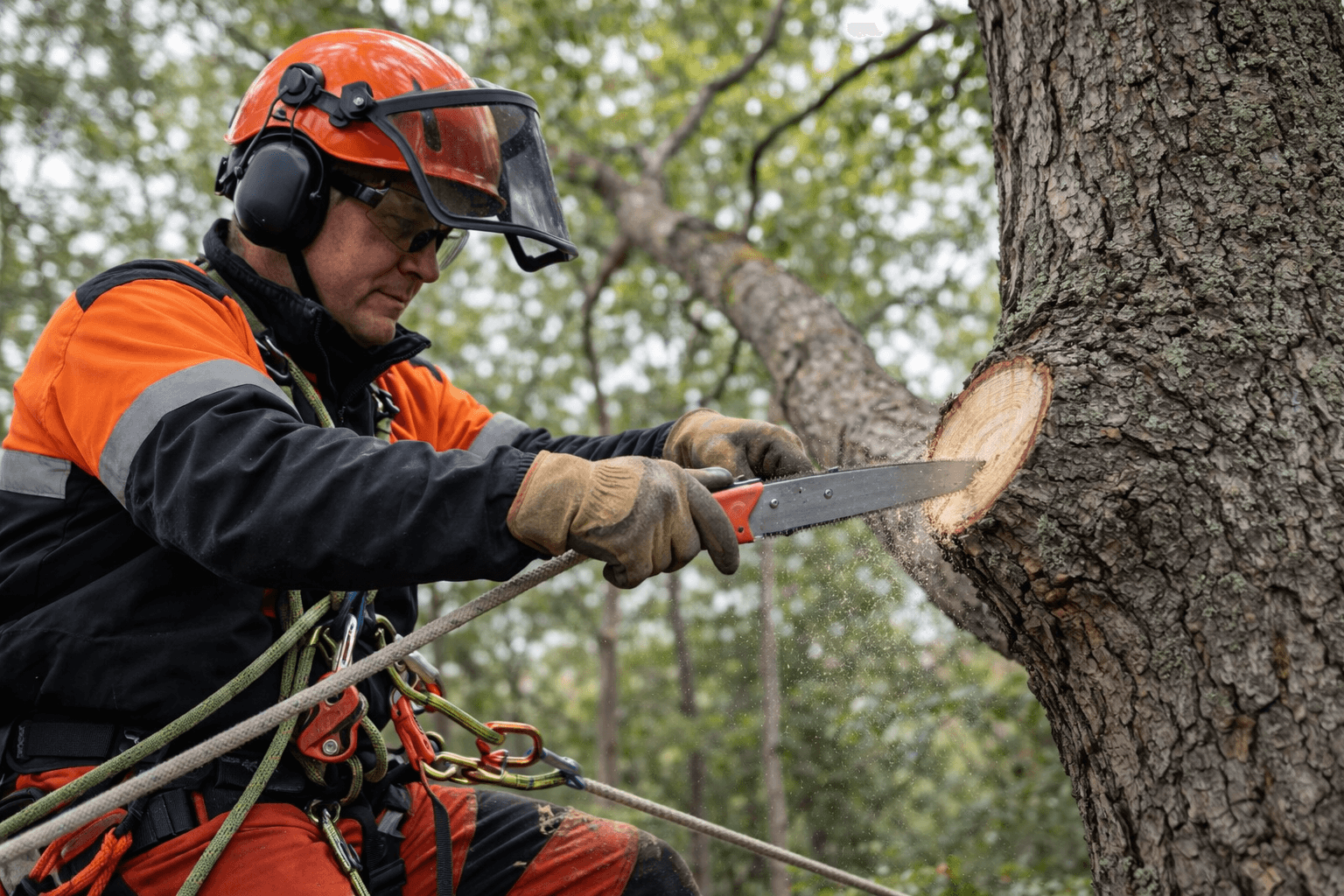
Tree Pruning Techniques are something every homeowner thinks they can handle with a pair of rusty loppers, but after 15 years of surgical work in the canopy, I’m here to tell you that a bad cut is a slow death sentence for a tree. In my decade and a half of climbing, I’ve seen beautiful oaks ruined by “hack jobs” that leave them vulnerable to rot and pests. If you want to maintain your property, you need to stop “cutting” and start understanding the science behind the blade.
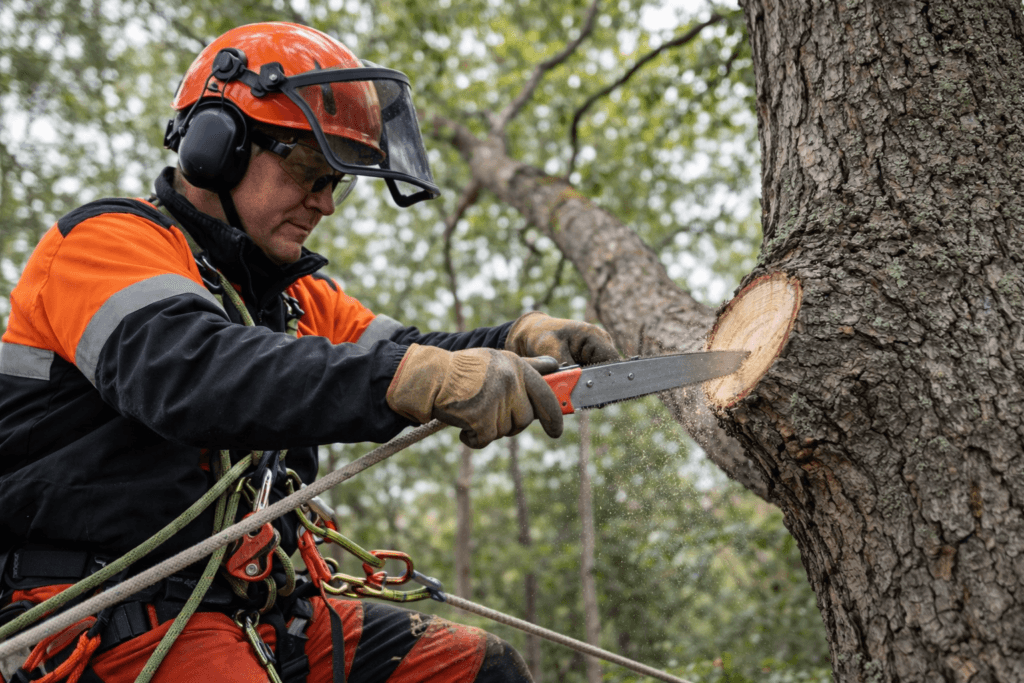
Tree Pruning Techniques: A Veteran Arborist’s Guide to Success
Tree Pruning Techniques are about more than just aesthetics; they are about biology and structural integrity. When I’m 60 feet up, every move I make is calculated to help the tree seal itself and thrive. If you aren’t thinking about the branch collar or the tree’s natural defense systems, you’re just creating a gateway for disease.
The Three-Cut Method: My Standard Protocol
The biggest mistake amateurs make is trying to take off a heavy limb in one single downward stroke. That weight will almost always cause the bark to tear down the trunk, leaving a massive, unsealable wound. I use the Three-Cut Method every single time to ensure precision.
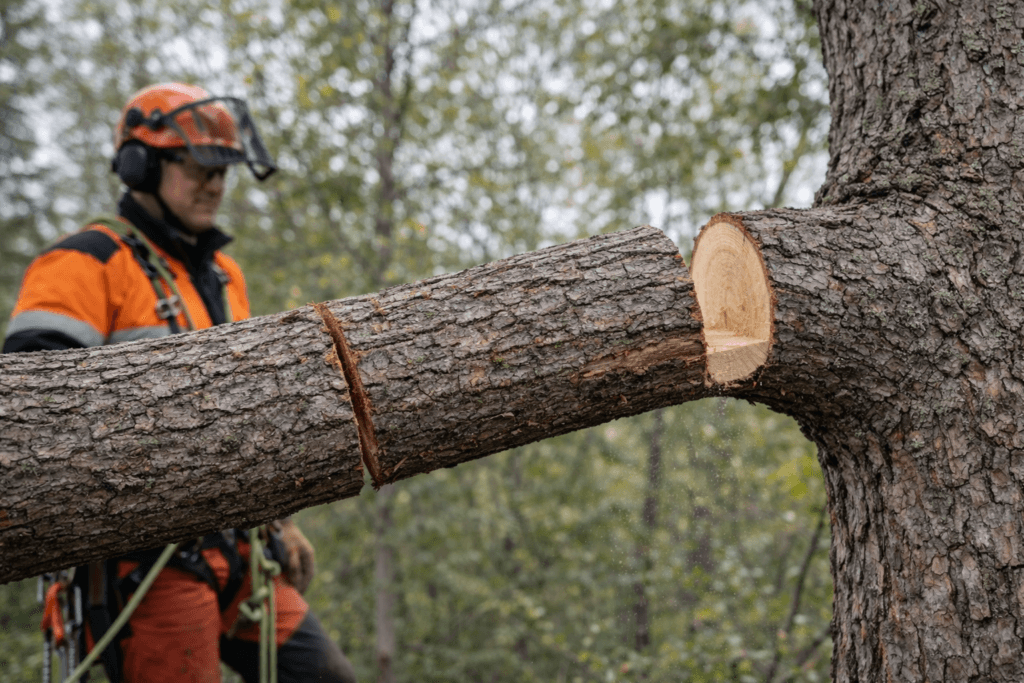
- The Undercut: About a foot out from the trunk, I make a shallow cut on the bottom of the limb. This stops a bark tear in its tracks.
- The Relief Cut: I go a few inches further out and cut all the way through from the top. This drops the heavy weight of the limb safely.
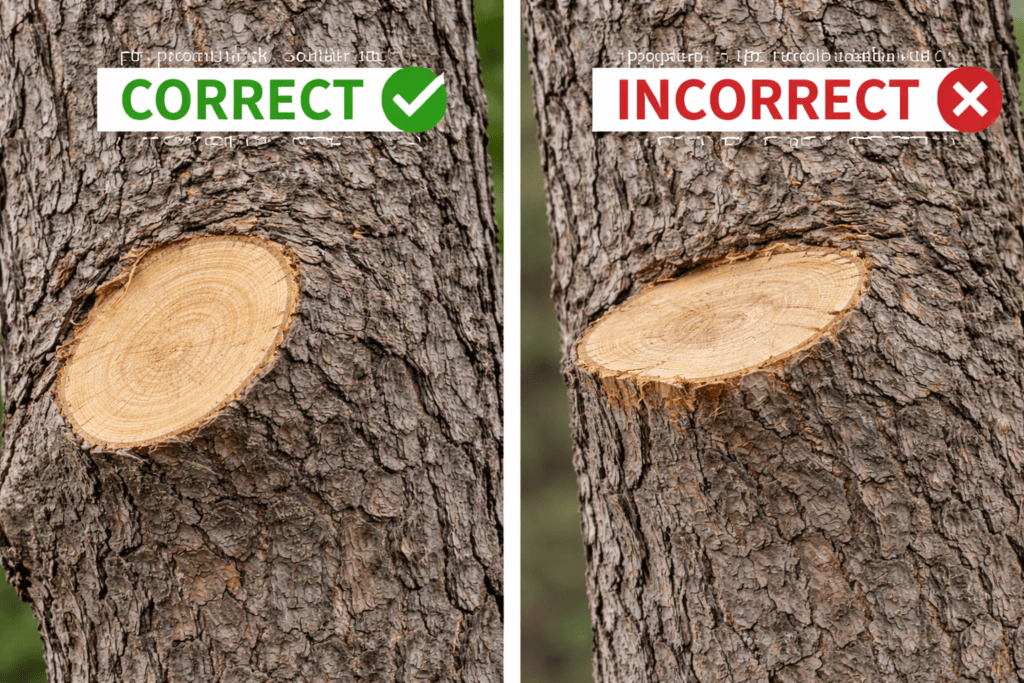
- The Final Finish: Now that the weight is gone, I make a clean, final cut just outside the branch collar. This is the “sweet spot” where the tree can grow over the wound.
OSHA, ISA, and Professional Safety Standards
In this line of work, we don’t just “wing it”. We follow a strict set of rules because the price of failure is too high.
- OSHA 1910.266: These federal standards keep us alive by mandating clear communication and hazard ID before the saw ever touches wood.
- ISA Protocols: The International Society of Arboriculture (ISA) sets the gold standard for how we manage tree health. We follow their lead on Tree Pruning Techniques like crown thinning and cleaning.
- ANSI A300: This is the American standard for pruning operations. It dictates that we never remove more than 25% of a tree’s foliage in a single season to prevent “starving” the root system.
Why Structural Pruning Matters for Your Safety
I’ve spent 15 years cleaning up after storms, and I can tell you that trees pruned for structure rarely fail.
- Crown Thinning: By selectively removing smaller branches, we allow wind to pass through the canopy rather than hitting it like a solid sail.
- Weight Reduction: Long, heavy limbs are prone to snapping under snow or ice. Tree Pruning Techniques focused on weight reduction keep the center of gravity where it belongs.
- Lion’s Tailing: Don’t let a “trimmer” strip all the inner growth and leave only a tuft of leaves at the end. This is called Lion’s Tailing, and it’s a death sentence for limb strength.
The Science of CODIT: How Trees Seal Wounds
One thing I wish every client knew is that trees don’t “heal” like humans do; they compartmentalize. This is known as CODIT (Compartmentalization of Decay in Trees).
- When you use proper Tree Pruning Techniques, you are helping the tree build a chemical wall against decay.
- A flush cut—cutting into the trunk itself—destroys that wall and lets rot enter the heartwood.
- My job, and yours, is to make the cut in a way that allows that beautiful callous ring to close the door on fungi and rot.
1 thought on “Mastering Tree Pruning Techniques: A Veteran Arborist’s Guide to Success”