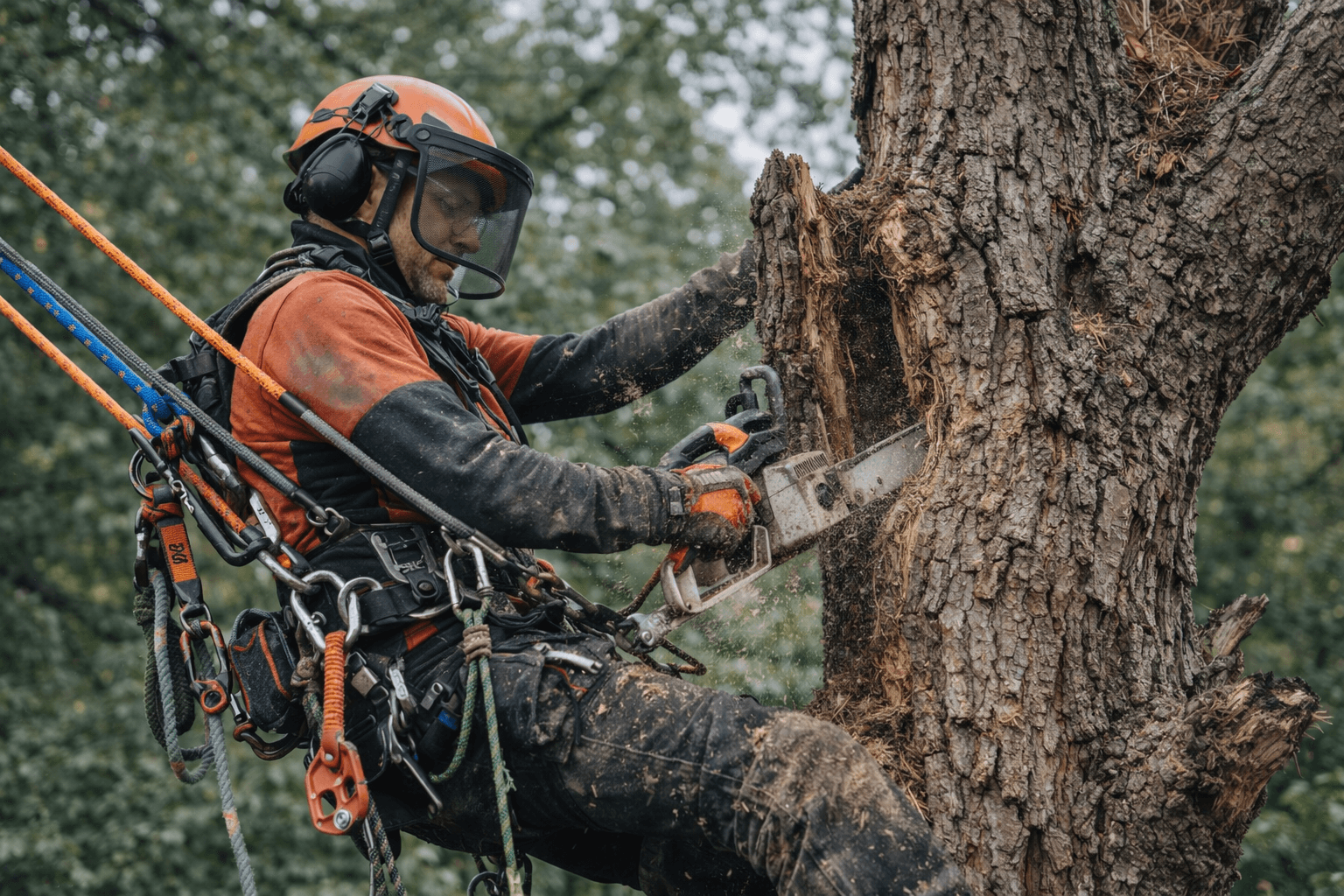
I’ve spent 15 years in a saddle, and I’m telling you straight—the timber we’re climbing in 2026 isn’t the same wood I started on. We’re dealing with “zombie trees” that look green from the outside but are structurally compromised by years of erratic weather patterns and internal stress. On Alex Tree Climber, I focus on the hard truth: if your technical tree removal strategy hasn’t evolved with the changing biology of our forests, you’re working on borrowed time.
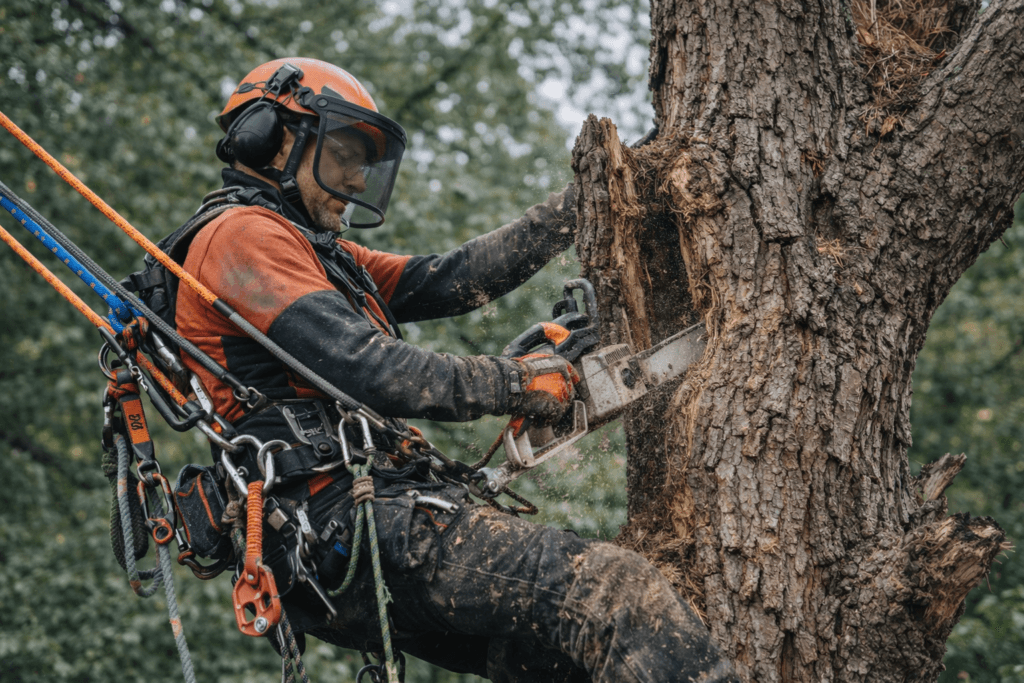
Why 2026 Demands a New Approach to Safety
Back in the day, we relied on a visual inspection and the old-school “thump” test with a mallet. Today, that’s not enough to guarantee your life. We are seeing internal decay in species like Oaks and Maples that used to be our most reliable anchors. This is why OSHA 1910.266 and ANSI Z133 standards have become even more critical. You need to perform a documented Level 3 Risk Assessment before you even think about throwing a throw-line over a union.
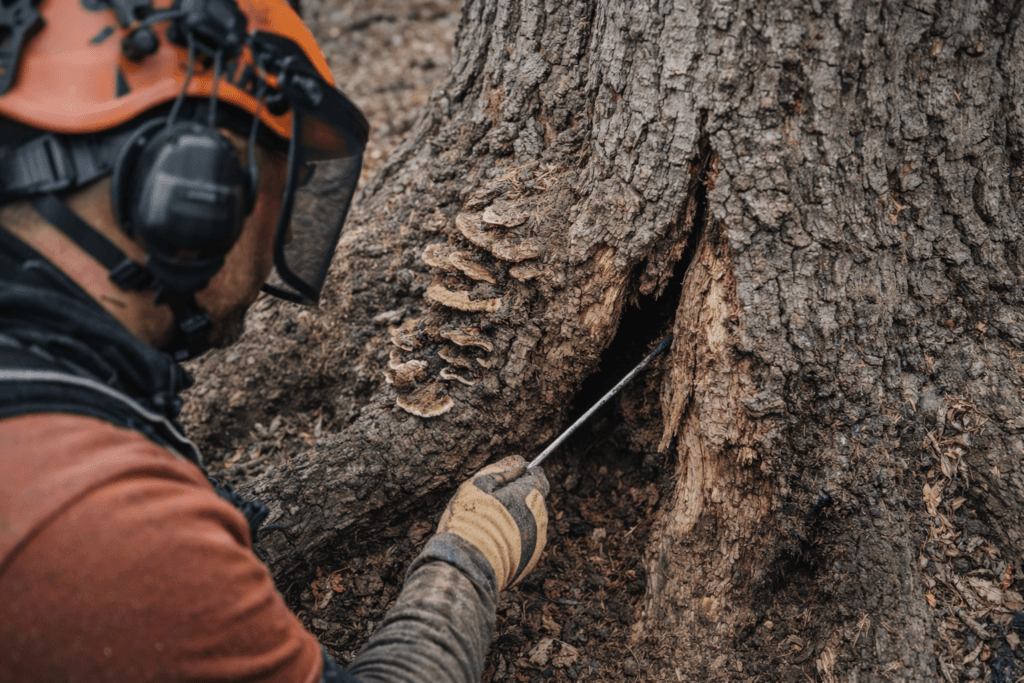
In 2026, technical tree removal starts with a probe and a deep understanding of fungal pathogens. If you aren’t checking the root flare for signs of Armillaria or Ganoderma—fungi that are thriving in these new humidity cycles—you aren’t an arborist; you’re just a guy with a saw taking a massive gamble.
Advanced Rigging for Brittle Canopies
When wood fiber is brittle, it loses its “elasticity”—the ability to bend without snapping. This means the sudden jolt or “shock load” of a falling log can snap a trunk like a dry toothpick.
Managing Dynamic Loads
Remember the physics of force: $F = ma$ (Force equals Mass times Acceleration). In 2026, our goal is to minimize the “a.” We don’t let wood drop anymore; we “float” it using controlled friction.
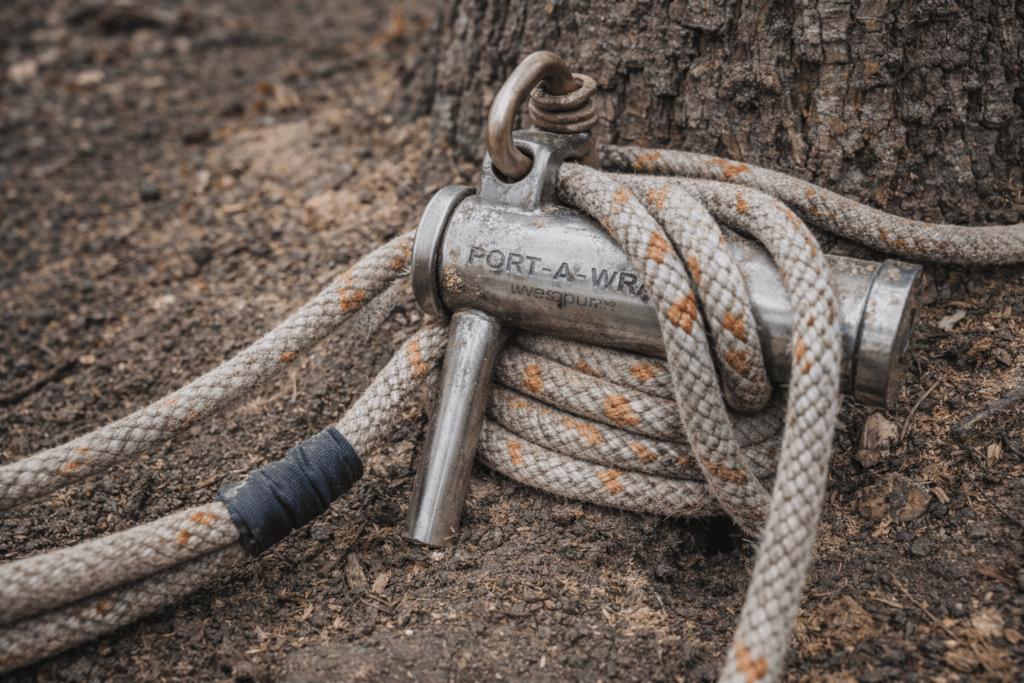
- Negative Rigging: This is where most fatalities happen. If you’re rigging a piece below your anchor point in brittle wood, you MUST use a friction brake like a Port-A-Wrap at the base of the tree. Never “dead-wrap” the line around the trunk; it provides zero control over the dynamic force.
- Impact Blocks: I’ve switched my entire kit to ISC Impact Blocks. Unlike standard pulleys, these are designed to absorb the peak force that would otherwise shatter a brittle union or snap your rigging line.
Mastering the Open-Face Notch for Precision
In the tight residential lots of 2026, where houses are built closer together than ever, you don’t have an inch of room for error. Technical tree removal requires surgical control over the direction of the fall.
The 70-Degree Advantage
I’ve moved exclusively to the 70- to 90-degree Open-Face Notch. Why? Because it keeps the hinge wood intact and working until the tree is almost 100% on the ground. Conventional 45-degree notches snap the hinge far too early. In the dry, brittle wood we’re seeing this year, an early hinge-snap means the tree can “chair-maker” or jump off the stump—a nightmare scenario for any climber.
Gear That Respects the Physics
Your tools are your lifeline, but only if they are the right ones for the job. In 2026, I’m seeing a massive shift in what the pros carry:
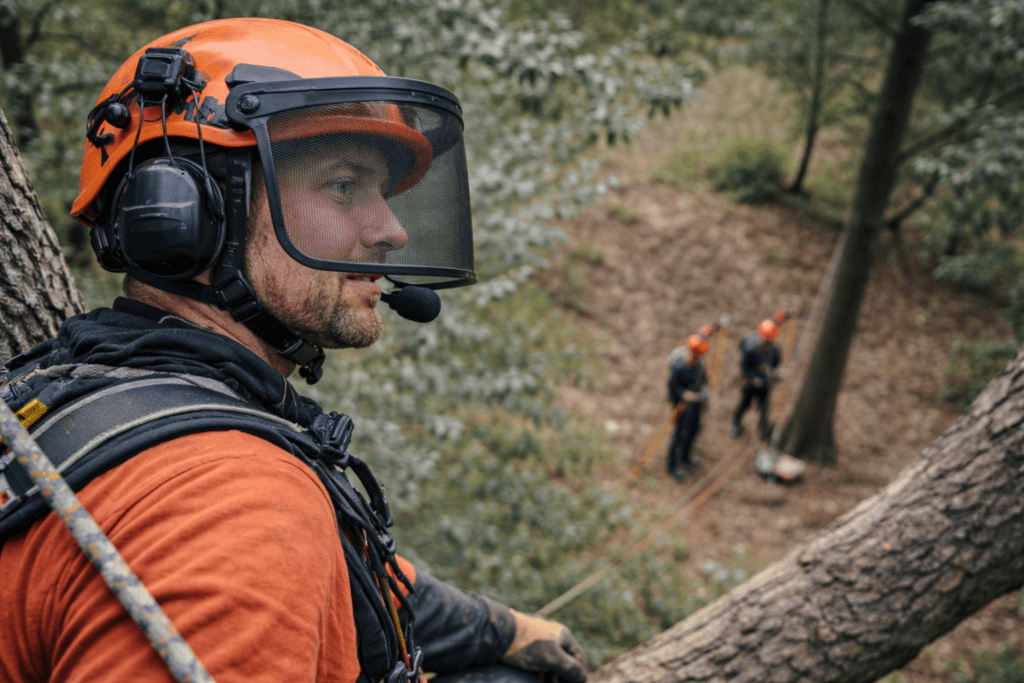
- Lightweight Synthetic Rigging Lines: These high-modulus lines have near-zero stretch. This means no “bungee” effect when a heavy piece hits the line, keeping the forces predictable.
- Integrated Bluetooth Comms: I swear by the Protos Integral with Sena headsets. Clear, quiet communication between the climber and the groundie prevents the “missed signal” that leads to catastrophic failures during a dismantle.
- Mechanical Advantage Systems: If a tree has a back-lean, don’t just “wedge and pray.” We now use 5:1 mechanical advantage systems to pull trees over center with total control.
Whether you’re a 20-year veteran or a rookie just getting your spurs, remember: the tree doesn’t care about your ego or your years of experience. It only responds to gravity and the laws of physics. Respect the wood, update your tools, and always stay tied in with a secondary attachment point.
1 thought on “The 2026 Hazard Guide: Master Technical Tree Removal in Brittle Wood”