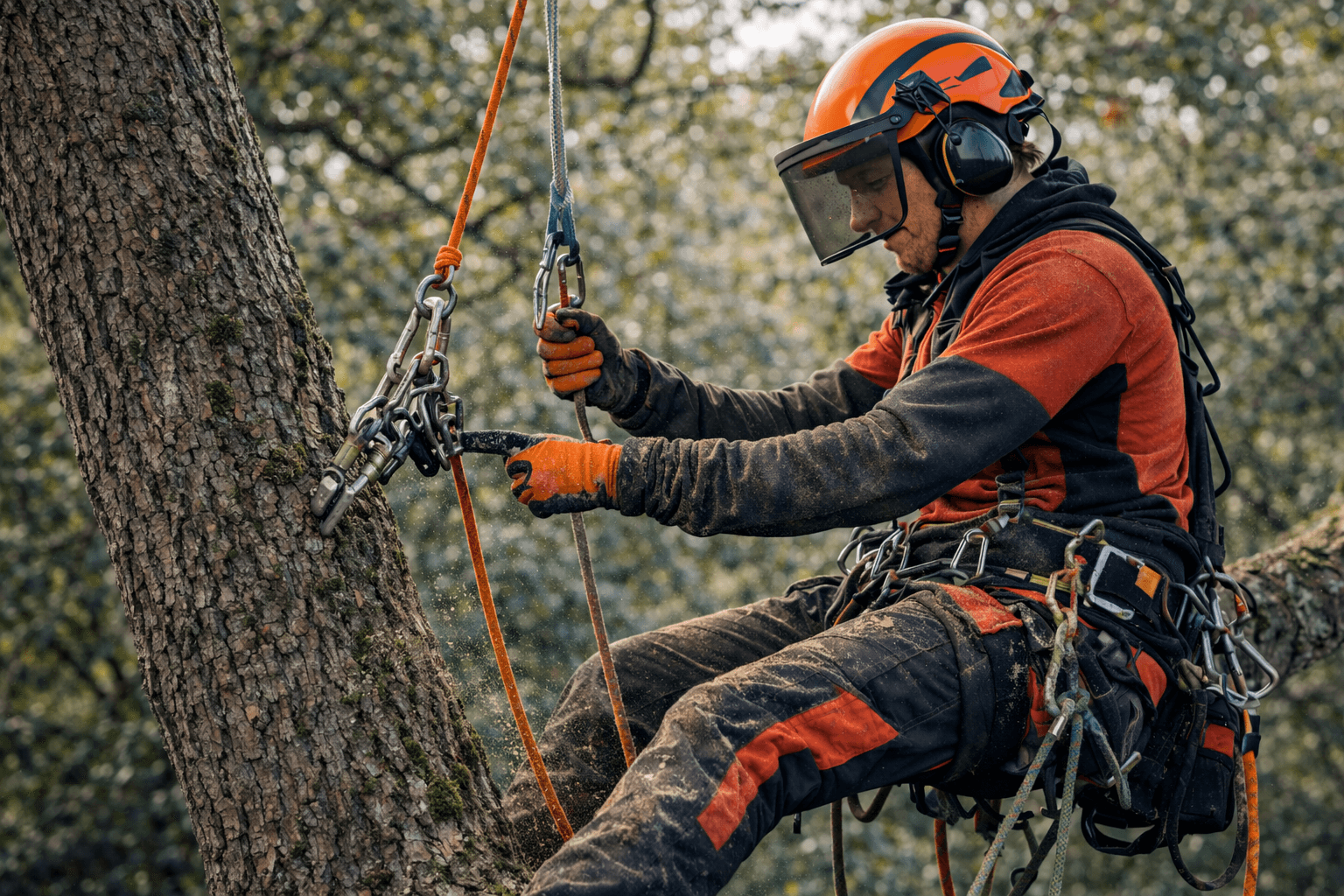
I’ve spent the last 15 years in a saddle, and I’ve seen enough “innovations” to know what’s a gimmick and what actually keeps you alive. On Alex Tree Climber, I don’t talk about the shiny stuff that looks good on a shelf. I talk about the tools that survive the daily abuse of pitch, grit, and gravity.
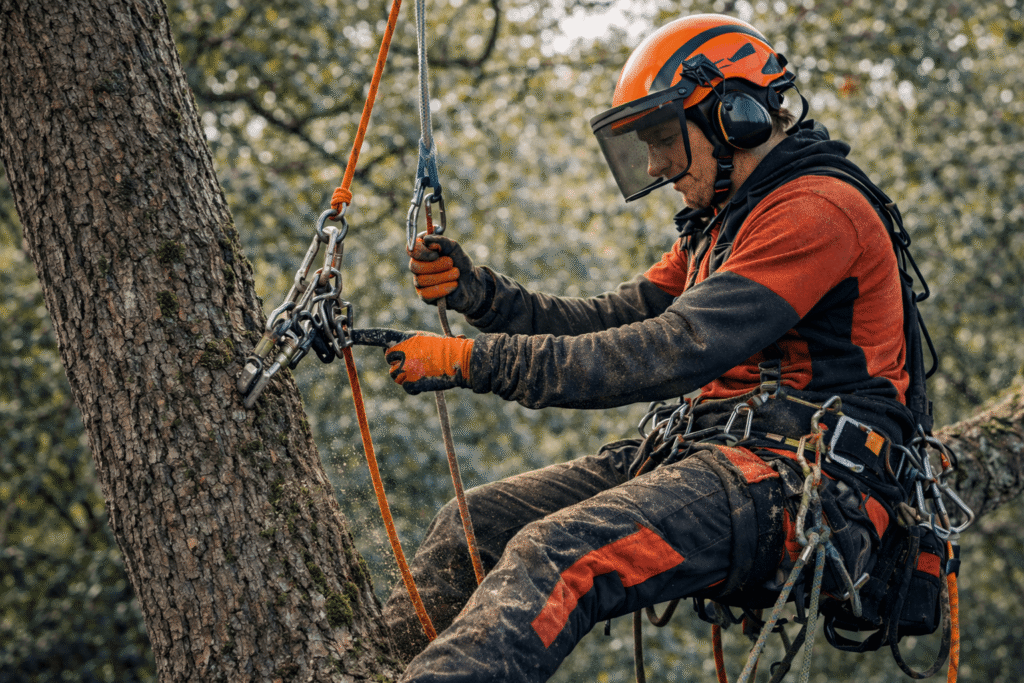
As we move through 2026, the industry is shifting. Trees are getting more brittle, and the “old school” way of muscling through a job is dead. You need to outsmart the tree. If you’re refining your bag, these are the five essential tools I swear by.
Table of Contents
High-Performance Cutting and Rigging Tools
When you’re out on a limb tip making a precision backcut, you don’t want to be fighting your equipment. You need tools that respond instantly.
1. The Mechanical Hitch: Rock Exotica Akimbo 2
I started my career on a friction hitch—Prusik, VT, Distel, you name it. I’ll always respect the roots, but the Akimbo 2 has fundamentally changed how I move. In 2026, efficiency isn’t just about speed; it’s about preserving your body for a long career.
The Akimbo is mid-line attachable, which is a massive win when you’re resetting your line in the canopy and don’t want to pull 150 feet of rope through your system. It handles both Stationary Rope Systems (SRS) and Moving Rope Systems (MRS) without skipping a beat. Whether I’m doing a 90-foot vertical ascent or a delicate limb walk on a dying ash, the consistency of mechanical friction saves my grip strength. In this game, hand fatigue is a safety hazard, and the Akimbo eliminates it.
2. Precision Cutting: The STIHL MS 201 T C-M
You can’t call yourself a climber without a top-handle saw you can trust with your life. The MS 201 T C-M remains the undisputed king of the canopy. I’ve tried the others, but nothing matches the power-to-weight ratio here.
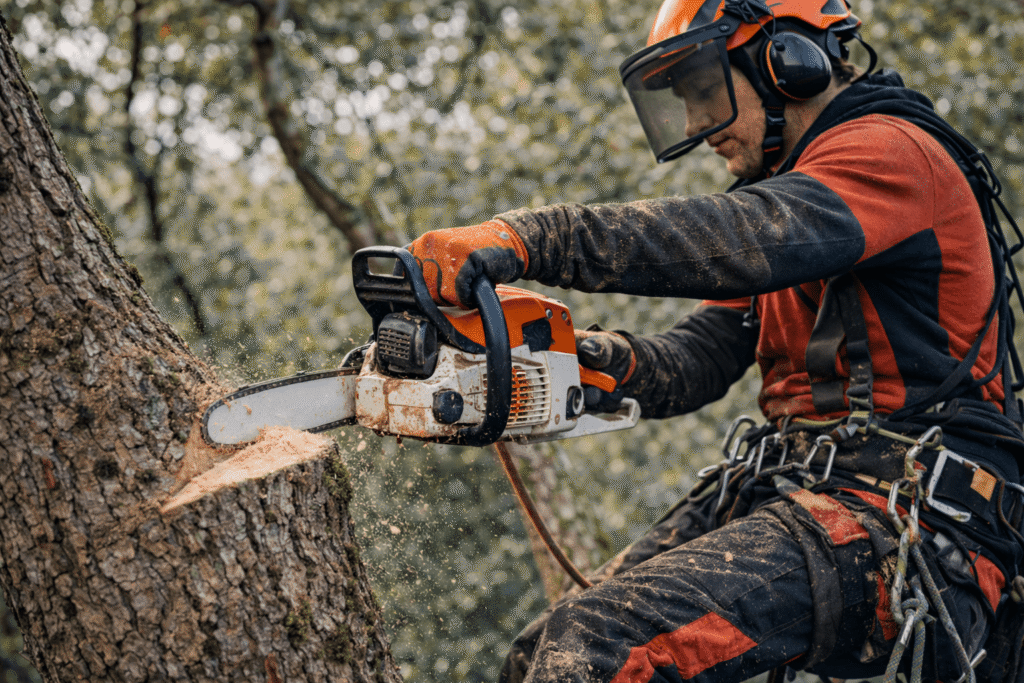
When you’re out on a limb tip, balancing your weight and making a critical backcut, you need a saw that screams the second you touch the throttle. The M-Tronic technology means I’m not messing with carb adjustments when the morning fog turns into a 90-degree afternoon. It’s snappy, it’s reliable, and it’s built for the professional who knows that a stalled saw mid-cut is a recipe for disaster.
3. The Port-A-Wrap: Controlling the Chaos
If you’re still “dead-wrapping” trees or letting your groundie hold the bull rope by hand, you’re an insurance claim waiting to happen. The Port-A-Wrap is my go-to for controlled friction.
In 2026, we’re dealing with heavier dynamic loads and tighter drop zones. This tool allows one person on the ground to smoothly “catch” a 500lb log without getting launched toward the first union. It turns raw physics from a threat into a manageable variable. I never start a technical dismantle without one rigged to the base of the tree. It’s the difference between a controlled descent and a smashed fence.
4. Modern Rigging: ISC Impact Blocks
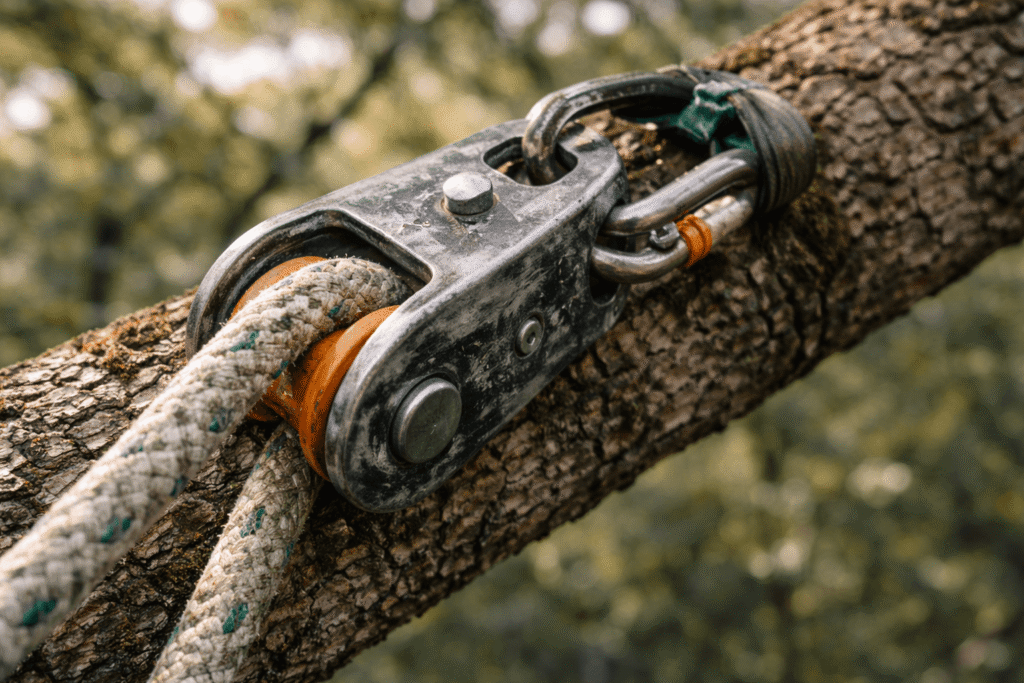
Stop running your rigging lines through natural crotches or cheap hardware. It kills the tree’s vascular system and glazes your expensive ropes from the heat. I use ISC Impact Blocks.
These aren’t just pulleys; they are engineered to absorb the shock of “negative rigging”—where the wood falls below the anchor point. A good block preserves the life of your bull rope and prevents that terrifying “bungee” effect that happens when a load hits a static point. If you’re dropping heavy wood over high-value targets, you don’t skimp on the blocks.
5. Integrated Comms: Protos Integral Helmet
This isn’t just head protection; it’s a communication hub. My Protos with integrated Senas is the most important “safety” tool I own.
In 2026, if you’re still screaming “Clear!” or “Drop!” over the roar of a 12-inch chipper, you’re living in the stone age. Being able to give quiet, calm, real-time instructions to my groundie while I’m mid-cut prevents 90% of site accidents. It keeps the crew’s heart rate down and the production speed up. You can’t put a price on knowing your groundman heard you the first time.
1 thought on “Top 5 Tools Every Real Arborist Needs”