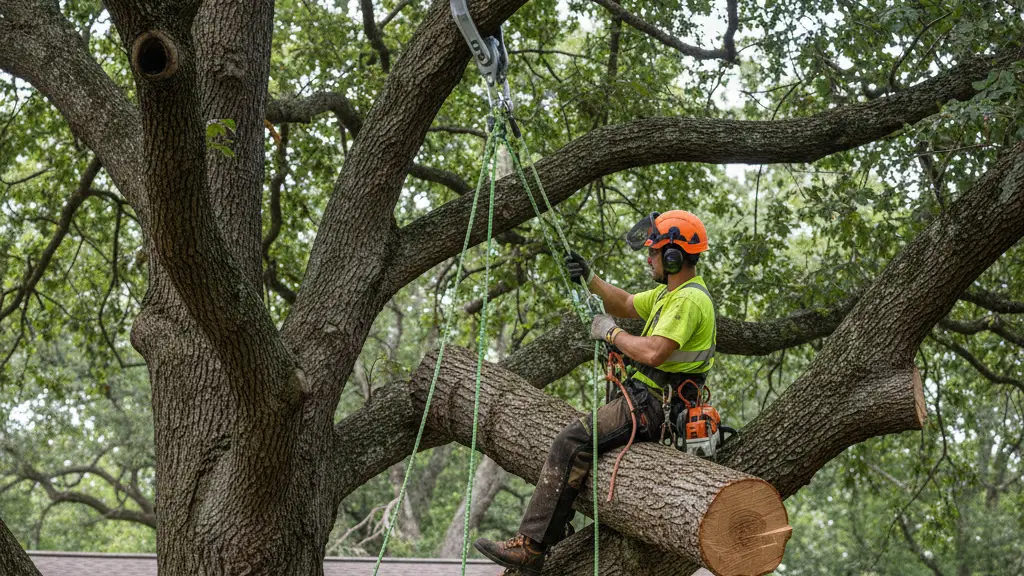
I’ve spent the last 15 years hanging from a saddle, and if there is one thing the canopy teaches you, it’s that gravity doesn’t negotiate. When you’re dismantling a 90-foot White Oak over a client’s sunroom, you aren’t just a tree cutter—you’re a physicist with a chainsaw. Rigging & Rope Work isn’t just about tying a knot and yelling “Timber!” It’s about understanding force, friction, and the cold reality that if a piece of wood weighs 1,500 pounds, it’s going to act like it.
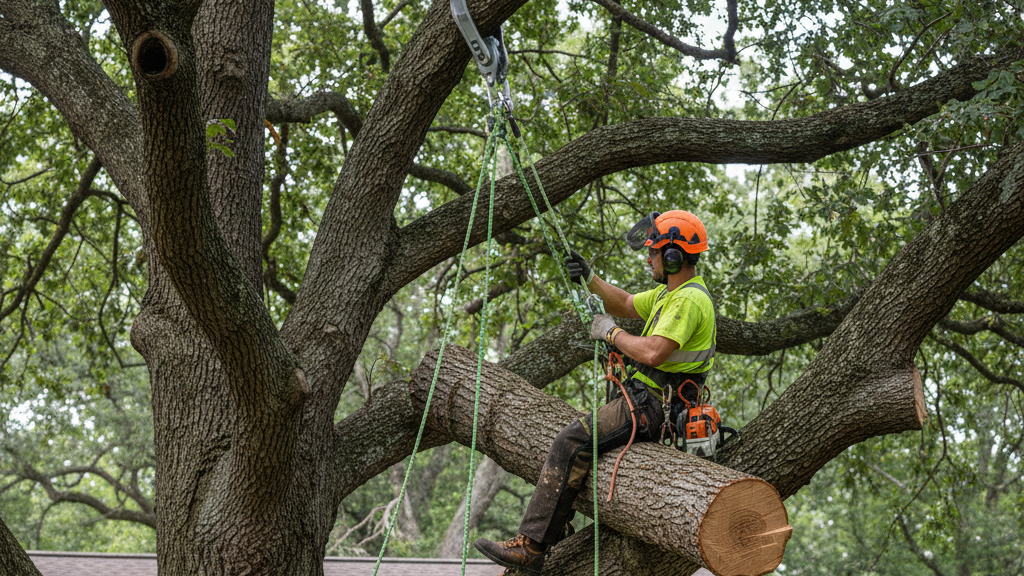
In my experience, the difference between a smooth “money” job and a disaster is how well you respect the lines in your hands. If you aren’t dialed into your systems, you’re just waiting for an accident to happen.
Table of Contents
The Foundation: OSHA Standards and ISA Protocols
In this industry, “safety” isn’t a suggestion; it’s the only reason we get to go home at night. If you’re working in the States, you live and die by the book—specifically OSHA and the ISA.
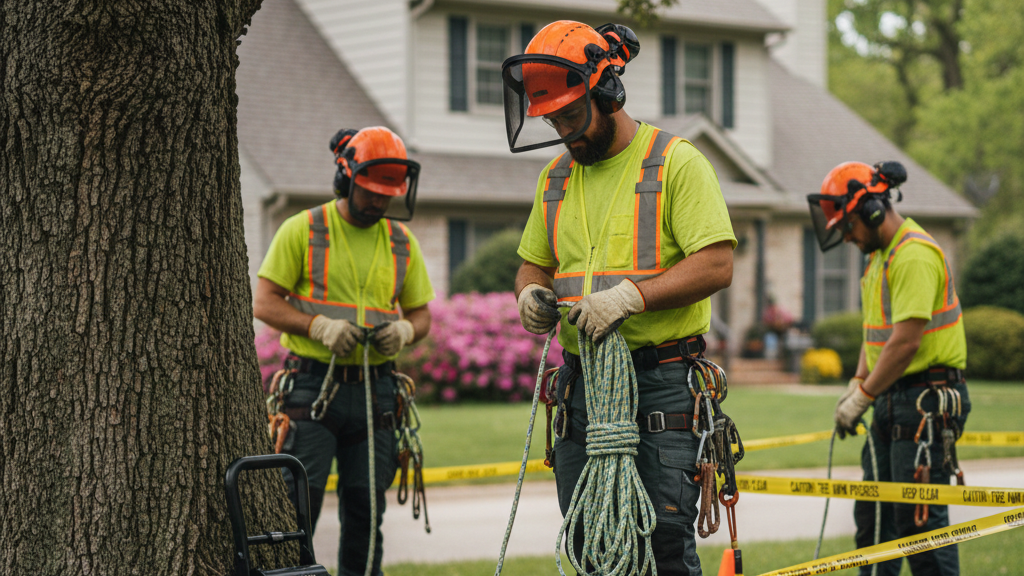
- OSHA 1910.268 & 1910.269: These aren’t just numbers on a government website. OSHA mandates specific clear zones and PPE (Personal Protective Equipment) for a reason. If your ground crew isn’t wearing hard hats or isn’t clear of the drop zone, you’ve already failed the mission.
- ISA Best Management Practices (BMPs): The International Society of Arboriculture (ISA) sets the gold standard for how we move through the tree. I follow ISA protocols for every tie-in point (TIP) I choose. If your TIP isn’t “wide and deep,” you’re betting your life on a twig.
Rigging Systems: It’s All About Friction
When I’m dismantling a massive lead, I don’t want the ground crew holding the raw weight of the log. That’s how people lose fingers.
The Power of the Port-a-Wrap
In my kit, the Port-a-Wrap is the MVP. It allows a single groundman to control a massive load by adding friction at the base of the tree.
- Static vs. Dynamic Loading: A falling log generates more force than a stationary one. You need to account for the “shock load.”
- Blocks and Pulleys: I prefer high-quality arborist blocks over natural crotch rigging. Why? Because friction in a natural crotch is unpredictable. A block gives me a smooth, consistent run every time.
Dismantling and Directional Felling
Sometimes you can’t just drop the whole tree. You have to take it apart piece by piece—what we call “sectional dismantling”.

The Art of the Notch
Even 50 feet up, directional felling matters. Your notch is your steering wheel.
- The Conventional Notch: Great for most removals. It gives me a solid 45-degree opening.
- The Open-Face Notch: My personal favorite for precision. It stays attached longer, giving the hinge more time to steer the log.
- The Hinge: This is the most critical part of the cut. I never, ever “cut my hinge.” That thin strip of wood is what keeps you in control.
Ropes: My Lifelines
I don’t use hardware store rope. I use 12-strand or 24-strand braided lines designed for the industry.
- Climbing Lines: Usually 11mm to 13mm. They need to have a high strength-to-weight ratio.
- Rigging Lines: These are the workhorses. They are built for abrasion resistance and energy absorption.
Hard-Earned Lessons from 15 Years in the Dirt
I’ve seen “cowboy arborists” try to skip steps to save ten minutes. Don’t be that guy. Rigging is a game of inches and ounces.
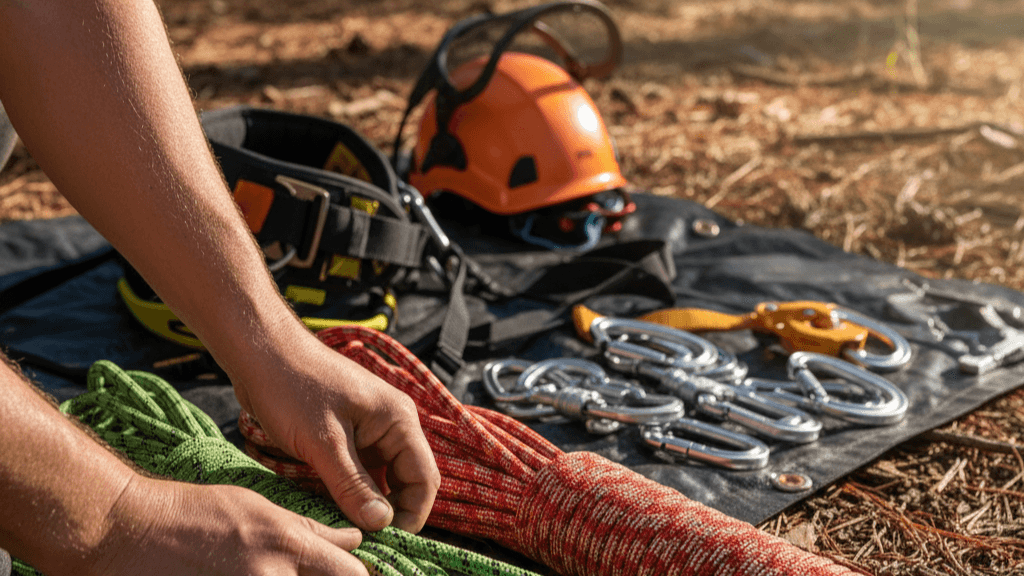
- Inspect Your Gear: I check my ropes every single morning. A nick in the cover might seem small, but under 2,000 pounds of tension, it’s a death sentence.
- Communication: If I can’t hear my groundman over the chipper, we don’t move. We use hand signals or Bluetooth headsets.
Final Thoughts
Rigging & Rope Work is a craft that requires constant learning. It takes years to develop the “eye” for how a limb will swing or how much a rope will stretch. Stay humble, follow the ISA protocols, and never respect a tree less than it deserves.
1 thought on “Rigging & Rope Work for Arborists: Technical Rigging & OSHA Safety”